General
Elizabeth Nunez, Who Chronicled the Immigrant’s Challenges, Dies at 80
In “Prospero’s Daughter” and other novels, she explored the legacy of colonialism in her native Trinidad and the struggle for belonging in an adopted country.
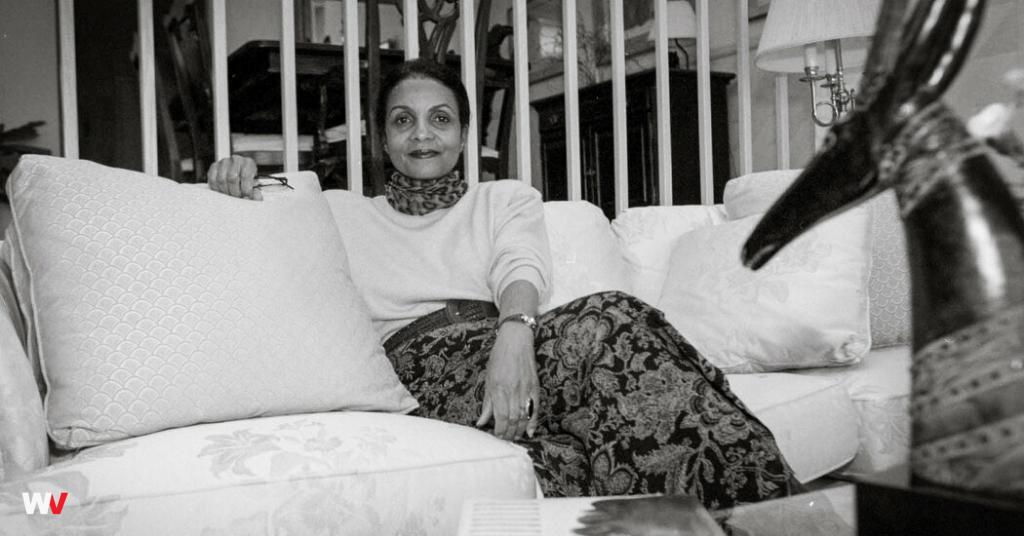
Elizabeth Nunez, a Trinidad-born writer whose novels explored the pressures of family, the queasy legacy of colonialism and the immigrant’s longing for home — while often poking fun at American academia and New York City’s publishing world — died on Friday at her home in Brooklyn. She was 80.
The cause was complications of a stroke, said Jason Harrell, her son.
Dr. Nunez was raised in a prominent Trinidadian family of Portuguese and African descent, and educated in the British colonial system — heavy on the Western canon. (The Republic of Trinidad and Tobago gained its independence the year she graduated from high school.) Growing up, she loved stories by the English children’s book author Enid Blyton, whose adventurous young characters she tried to emulate by wearing cardigans in the hot Caribbean sun and affecting a taste for cucumber sandwiches. She was known as Betty until she was 11, when she persuaded her parents to drop her childhood nickname after reading “Pride and Prejudice” and identifying with Jane Austen’s strong heroine, Elizabeth Bennet.
In 1963, she was sent to a tiny Roman Catholic college in Wisconsin, where she said she was, for all intents and purposes, “a Black English girl.” She knew her European history, but next to nothing about the Caribbean and the brutal story of colonialism. Her ideas about Africa were similarly Eurocentric: She thought it was a continent of savages, running around in grass skirts. Tarzan was involved.
When she began mapping out her first novel, “When Rocks Dance” (1986), she was planning to write about a contemporary woman, an academic and a feminist like herself, who was island born but living in America. Instead, she ended up writing mostly about the society she had left behind, the clash of modernism and mysticism there, and steeping herself, at last, in her homeland’s dark history.
“I had to understand myself, and where I came from,” she once said. “Then I was off to the races.”
The protagonist of her second novel, “Beyond the Limbo Silence” (1998), was very much like Dr. Nunez, a young Trinidadian sent to college in chilly Wisconsin — in a town that “had no Negroes,” she wrote, “so it had no Negro problem” — who becomes involved with a Black law student and civil rights activist.