General
Breaking news. EU to raise €35 billion loan for Ukraine using Russia’s frozen assets, von der Leyen says
Ursula von der Leyen has announced a multi-billion initiative to help Kyiv plug the hole in its state budget.
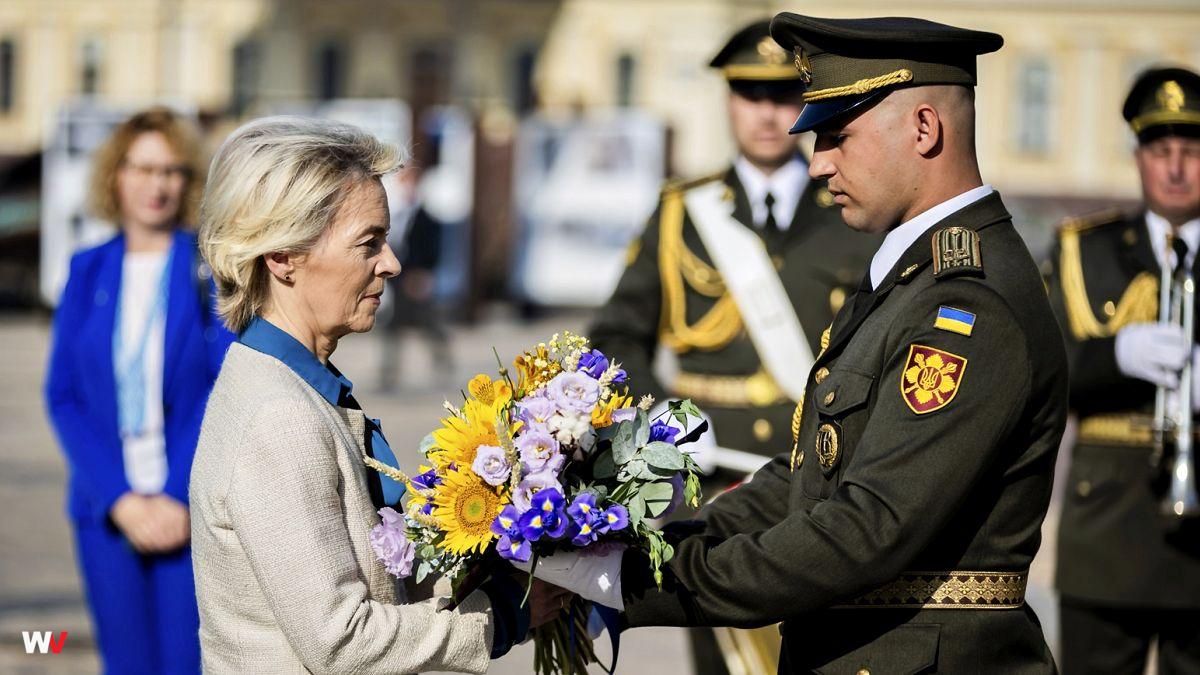
The European Union will raise a €35 billion loan to support the Ukrainian economy and military as the war-torn country battles to resist a renewed Russian offensive that has badly damaged the energy infrastructure and made territorial advances in the East.
The loan was announced by Ursula von der Leyen on Friday during her visit to Kyiv. “Relentless Russian attacks means Ukraine needs continued EU support,” the European Commission president said. “This is another major EU contribution to the Ukraine’’s recovery.”
The pledge represents the EU’s share of the $50 billion plan (€46 billion) that G7 allies had promised in their June summit, using Russia’s immobilised assets as collateral.
The original idea was for the EU and the US to contribute $20 billion each, while Canada, the UK and Japan would commit the remaining funds.
But the G7 initiative has become bogged down in technical talks between EU and US officials, with no easy resolution in sight.
As the EU sanctions on the assets need to be renewed every six months by unanimity, the White House fears Hungary, the most Russia-friendly member state, could one day wield its veto, unfreeze the money and cause the entire loan to unravel, leaving Western allies to foot the bill of repayments with their national budgets.
Last week, the Commission presented member states with three options to ensure the long-term predictability of the sanctions, with renewal periods ranging from 36 months to five years. But a few days later, Hungary made clear it would not move forward with the scheme until the US presidential elections of 5 November.
The lack of consensus makes it hard for Brussels to give Washington the legal assurances it needs. Due to the financial risks associated with the operation, the US Congress will need to approve additional funding, something unlikely to happen.
With the situation in Ukraine turning increasingly dire and rising fears of a humanitarian crisis in the winter, the Commission is stepping things up and increasing its participation to €35 billion in a bid to allay the White House’s concerns.
Details of the Commission’s plan were not immediately available.

Ahead of her visit to Kyiv, von der Leyen announced a €160 million assistance package for Ukraine, with €100 million backed by Russia’s frozen assets to repair power plants and boost renewables, offering 2.5 Gigawatts of capacity.