
General
Breaking news. EU confirms steep tariffs on Chinese electric vehicles, effective immediately
Brussels accuses Beijing of lavishing its car-makers with enormous amounts of subsidies that lead to artificially low prices and unfair competition.
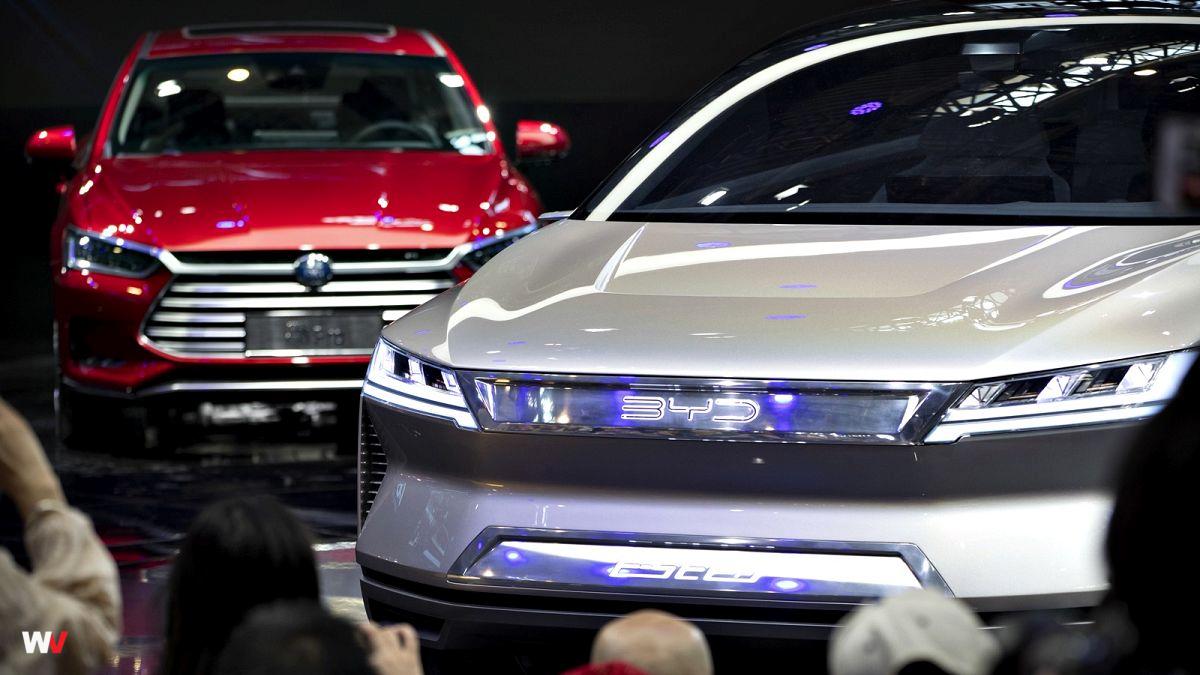
The European Commission has confirmed what seemed to be a predetermined conclusion: steep tariffs will be slapped on China-made battery electric vehicles (BEVs) as of 5 July, a momentous decision poised to redefine relations with Beijing and invite retaliatory measures against European producers.
The step, previewed in early June, is the result of an in-depth investigation that found subsidies being pumped across the entire supply chain of BEVs produced in China, both by domestic and foreign companies. Public money was detected everywhere, officials said, from the mining of raw materials needed to churn out batteries to the shipping services employed to bring the finished products to Europe’s shores.
The sheer scale of subsidies allows Chinese producers to offer their BEVs at noticeably lower prices than those assembled in the bloc, where energy and labour costs are much higher. The price gap has triggered a rapid surge in imports of China-made BEVs: from a 3.9% market share in 2020 to 25% at the end of 2023, according to the Commission.
This wave of low-cost imports represents a “threat of economic injury” to EU competitors that could lead to unsustainable losses and put at risk more than 12 million direct and indirect jobs, the executive warns.
Tariffs are therefore necessary to offset the advantage granted by subsidies.
The decision published on Thursday foresees differentiated duties, calculated according to the parent company, annual turnover and suspected amount of subsidies received. They will come on top of the existing 10% rate.
- BYD: 17.4%
- Geely: 19.9%
- SAIC: 37.6%
- Other BEV producers in China that cooperated in the investigation but have not been individually sampled: 20.8%
- Other BEV producers in China that did not cooperate: 37.6%
The introduction of the measures will be, for the time being, provisional. Customs authorities will request bank guarantees, rather than cash, from Chinese exporters, meaning end customers might not immediately notice a change in their pocket.
Member states will hold a first vote in two weeks but this will be non-binding and serve to test the political waters. The tariffs will remain in place until a final decision is taken in November, which countries could block with a qualified majority against.
Germany and Hungary are among those likely to oppose, although they might fall short of the required numbers to derail the initiative. (At least 15 member states.)
In the meantime, Brussels and Beijing will discuss possible solutions that could avert the permanent introduction of tariffs.
“We are continuing to engage intensively with China on a mutually acceptable solution. Any negotiated outcome to our investigation must clearly and fully address EU concerns and be in respect of WTO rules,” Valdis Dombrovskis, the Commission’s Executive Vice-President in charge of trade, said in a statement.

Hopes for a breakthrough are nevertheless low. Beijing has contested the investigation in form and substance, calling it a “naked protectionist act” that “artificially constructed and exaggerated the so-called subsidies,” and has vowed to “take all necessary measures to firmly defend the legitimate rights and interests of Chinese companies.”
Last month, the Ministry of Commerce of China launched an anti-dumping investigation into pork imports coming from the EU, a move widely seen as a prelude to retaliation. Agriculture and aviation are considered the sectors most vulnerable to Beijing’s wrath.