
General
An Autocrat’s Tool Backfires in Venezuela
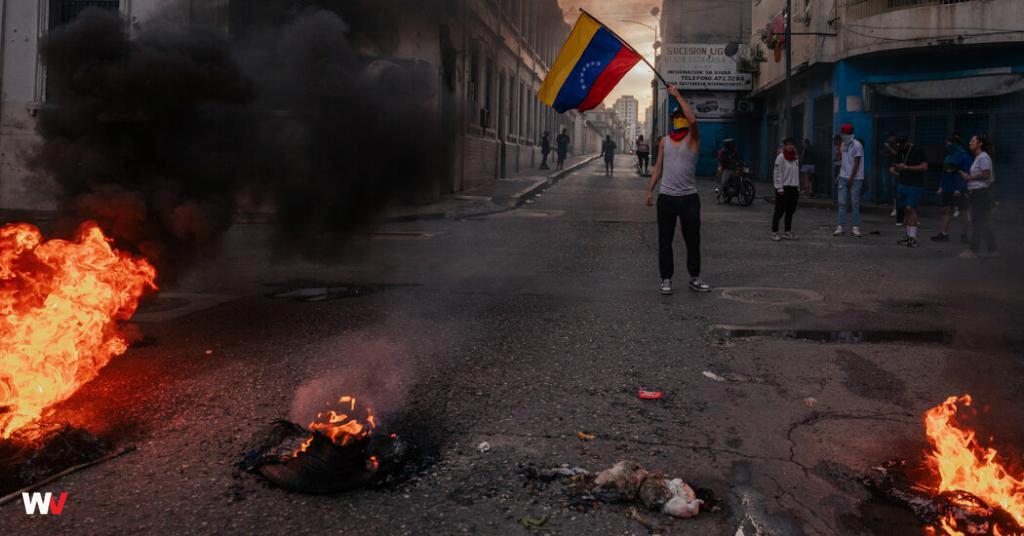
Nicolás Maduro claimed victory in his country’s election. But exit polls suggested the opposition leader won a landslide, setting off protests around the country.
It is common for autocrats to hold elections. As I’ve written before, winning an election can allow an autocratic leader to claim a popular mandate and to demonstrate to the military and to the political elite that the government’s hold on power is strong enough to make loyalty their safest bet.
If autocrats agree to hold elections, it is usually because they think they are going to win, according to Gretchen Helmke, a political scientist at Rochester University in New York who studies democracy in the Americas. “Or at least come very close to winning so that tilting the outcome in their favor is not seen as so egregious,” she added.
Holding elections is therefore typically not a risk to autocratic power but a means of trying to legitimize and strengthen it. These leaders usually use the tools of state to manipulate and control the election in ways that are “upstream” of the actual vote, such as arresting opposition leaders, barring opposition candidates from the ballot and cracking down on the media.
But sometimes that playbook fails. Even stage-managed contests can produce surprises, delivering a win for the opposition instead of a ratification of the incumbent’s power. When that happens, elections can go from being an autocrat’s tool to an autocrat’s nightmare.
The Chilean dictator Augusto Pinochet, for instance, expected a 1988 plebiscite to grant him a new mandate, but instead it proved his undoing, ousting him from office and ushering in a return to democracy.
It is still very unclear what the election results will mean for the Venezuelan president, Nicolás Maduro, who has proved adept at hanging onto power. He claimed victory in Sunday’s election after the government-controlled electoral body declared him the winner.