

General
200 Miles of Sublime Pain on a Hindu Pilgrimage in Pakistan
When Amar Faqira’s 3-year-old son abruptly lost movement in his foot last year, doctors offered little hope, and panic gripped his family. Mr. Faqira made a vow. If his prayers were answered and the boy recovered, he would make a 200-mile pilgrimage …
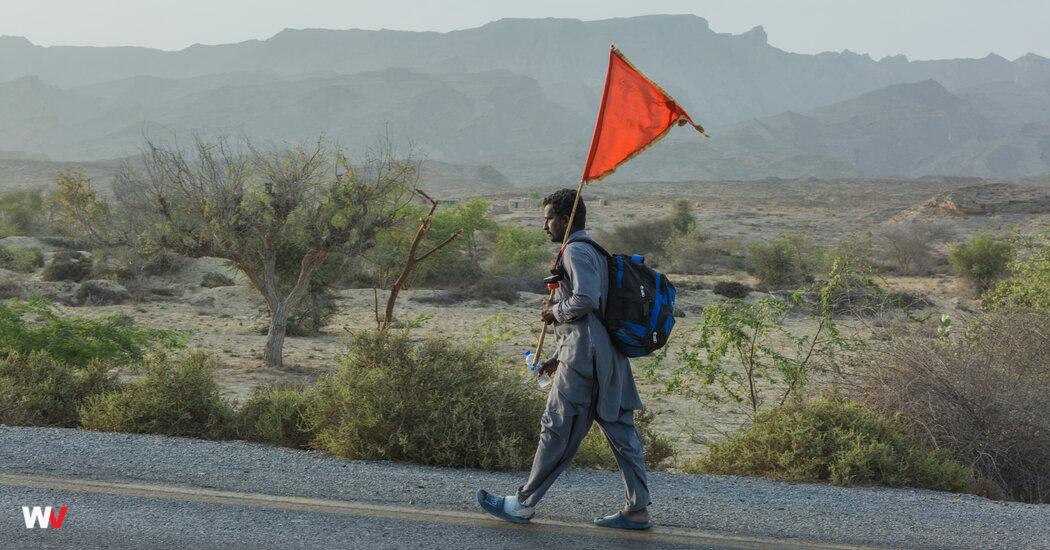
When Amar Faqira’s 3-year-old son abruptly lost movement in his foot last year, doctors offered little hope, and panic gripped his family.
Mr. Faqira made a vow. If his prayers were answered and the boy recovered, he would make a 200-mile pilgrimage through blistering plains and jagged terrain to the Hinglaj Devi temple, a site sacred to Hindus, a tiny minority in Pakistan.
The child regained strength a year later. And true to his word, Mr. Faqira set off in late April on a seven-day walk to the temple, which is nestled deep in the rust-colored mountains of Balochistan, a remote and restive province in Pakistan’s southwest.
The goddess “heard me and healed my son,” Mr. Faqira said before the trek, as he gathered with friends and family in his neighborhood in Karachi, a metropolis on the coast of the Arabian Sea. “Why shouldn’t I fulfill my vow and endure a little pain for her joy?”
With that sense of gratitude, Mr. Faqira and two companions, wearing saffron head scarves and carrying a ceremonial flag, joined thousands of others on the grueling journey to Hinglaj Devi, where Pakistan’s largest annual Hindu festival is held.
Along a winding highway and sun-scorched desert paths, groups of resolute pilgrims — mostly men but also women and children — trudged beneath the unforgiving sky, in heat that reached 113 degrees Fahrenheit, or 45 degrees Celsius. Some bore idols of the deity associated with the temple. All chanted “Jai Mata Di,” a call meaning “Hail the Mother Goddess.”





