

Fashion
Why Ultrathin Is In
When it comes to fashion models, the body diversity revolution appears to be at an end.
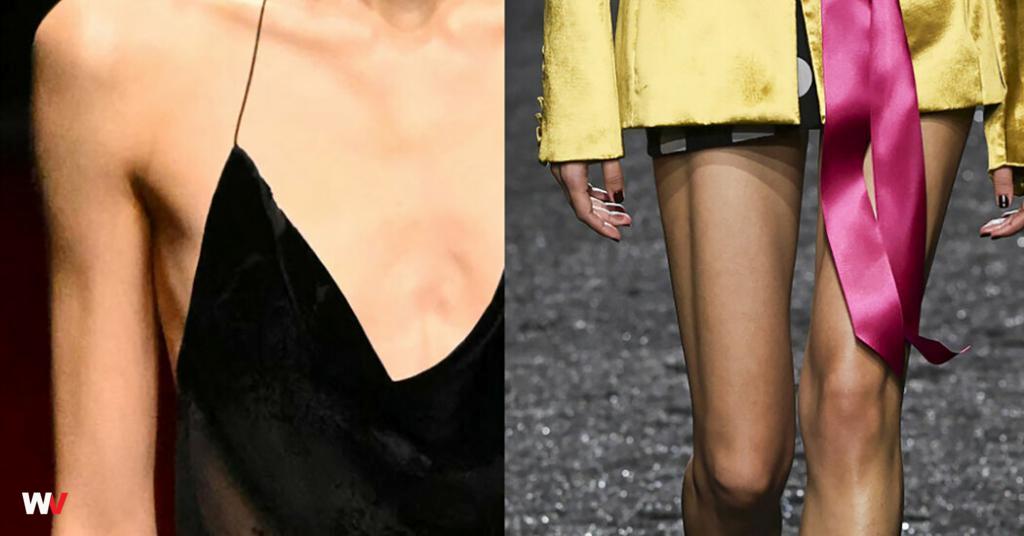
Earlier this month, I was standing backstage at the Schiaparelli show in Paris talking to the designer Daniel Roseberry about his collection and the way he had used trompe l’oeil — bigger shoulders, neoprene padding at the hips — to create an hourglass figure.
“Like this?” I asked, pointing to a model in a gown accessorized with what resembled shelflike hip bones.
“Oh, well, not that one,” Mr. Roseberry said. “Those are actually her hips.” Her bones were more than prominent enough, all on their own.
Of all the trends at the fall runway shows, including the uptick in fur (or fur-alike) clothing, the rise of clothing with built-in power curves and the preponderance of black leather, the single most ubiquitous one was the worst: the erosion of size inclusivity.
Ironically, as fashion embraces (and creates) faux womanly figures by design, the actual bodies inside the clothes are shrinking. After reaching a peak in 2021, when Paloma Elsesser became the first plus-size model to appear on the cover of American Vogue, body diversity has taken a clear downward trajectory, decreasing pretty much every season.
“The pendulum went one way, and now it’s swinging full force the other way,” said David Bonnouvrier, a founder of DNA Model Management.





