
Fashion
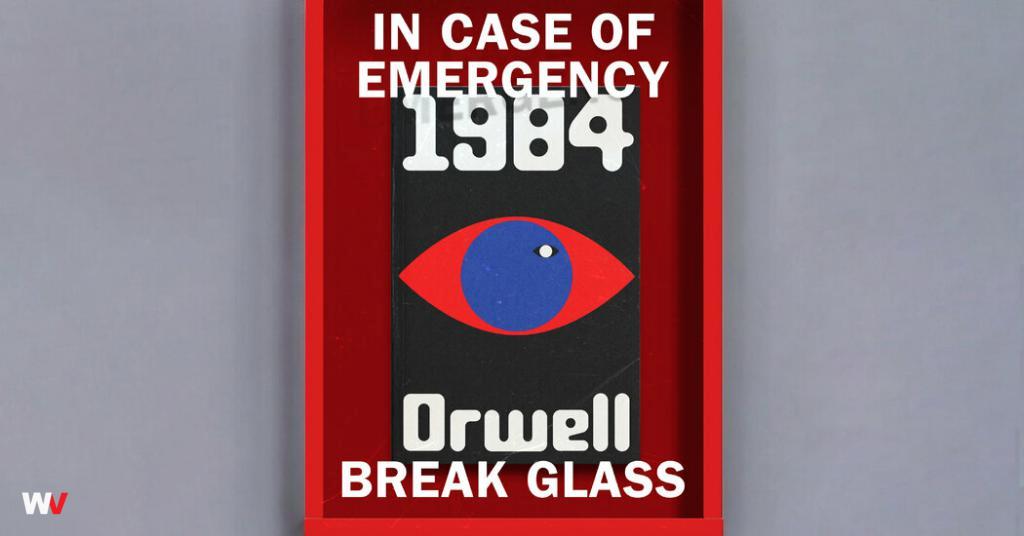
We Are All Living in George Orwell’s World Now
As Vice President JD Vance dressed down European officials over two days last month for criminalizing far-right speech, his outrage built to the unkindest cut of all. “This is Orwellian,” he trumpeted, “and everyone in Europe and the U.S. must reject …
As Vice President JD Vance dressed down European officials over two days last month for criminalizing far-right speech, his outrage built to the unkindest cut of all. “This is Orwellian,” he trumpeted, “and everyone in Europe and the U.S. must reject this lunacy.”
Listen to this article, read by Eric Jason Martin
A day later, Orwell reappeared — this time wielded against President Trump after his truth-mangling suggestion that Ukraine was somehow responsible for Russia’s invasion. Even a fellow Republican, Representative Don Bacon of Nebraska, couldn’t resist: “Putin started this war,” he posted on X, adding, “I don’t accept George Orwell’s doublethink.”
And as Trump unleashed a torrent of norm-puncturing executive orders — declaring newly forbidden words here, renaming a body of water there, making assertions that seemingly mean their polar opposite — so many references to “1984” have flooded the political conversation that it feels as if nearly half the electorate joined the same book group. After the White House took facts on a loop-de-loop, claiming that officials who revealed details of strike plans in Yemen on a Signal chat had not disclosed classified information, hundreds of people posted the same Orwell quote on social media: “The Party told you to reject the evidence of your eyes and ears. It was their final, most essential command.” T-shirts with the same line are available on Etsy for as low as $16. So is one with a fake Orwell quip: “I literally wrote a book to warn you all about this.”
Orwell is the long-dead British writer whom no one will let rest in peace. He remains forever current, thanks to his novels “Animal Farm” and, especially, “1984,” easy-reading teenage favorites — one an animal fable that skewered Stalinist totalitarianism, the other a satire of an all-seeing, all-controlling ruling party epitomized by Big Brother. He was an inveterate democratic socialist, but his writing established him as a champion of fearlessly independent political thought and an enemy of political expression dominated by “euphemism, question-begging and sheer cloudy vagueness,” as he wrote in his 1946 essay “Politics and the English Language.”
Warnings of language as a weapon of manipulation, obfuscation and oppression run through Orwell’s work. It is a reason you could be excused for hearing real-life echoes of scenes from “1984” emanating from Washington. Trump’s airbrushing of the deadly Jan. 6 attack on the Capitol as a “beautiful day” and the pardoning of violent rioters who, he said, had “love in their hearts” recalls one of Orwell’s quotes: “The past is whatever the Party chooses to make it.” The bureaucrat who gleefully bragged that “we’re destroying words — scores of them, hundreds of them, every day” could have been deployed at Pete Hegseth’s Pentagon on the search-and-delete mission for references to race, but in fact worked at Orwell’s Ministry of Truth in “1984.”