Fashion
The Choreographer Bringing Hope to the Stage and Beyond
Beneath the soaring dome of the Panthéon, performers, dressed in black, spilled across a vast stage. Suddenly their bodies stopped and with it, the breeze in the air. Now still as sculptures, they began to shift their heads, gradually locking eyes …
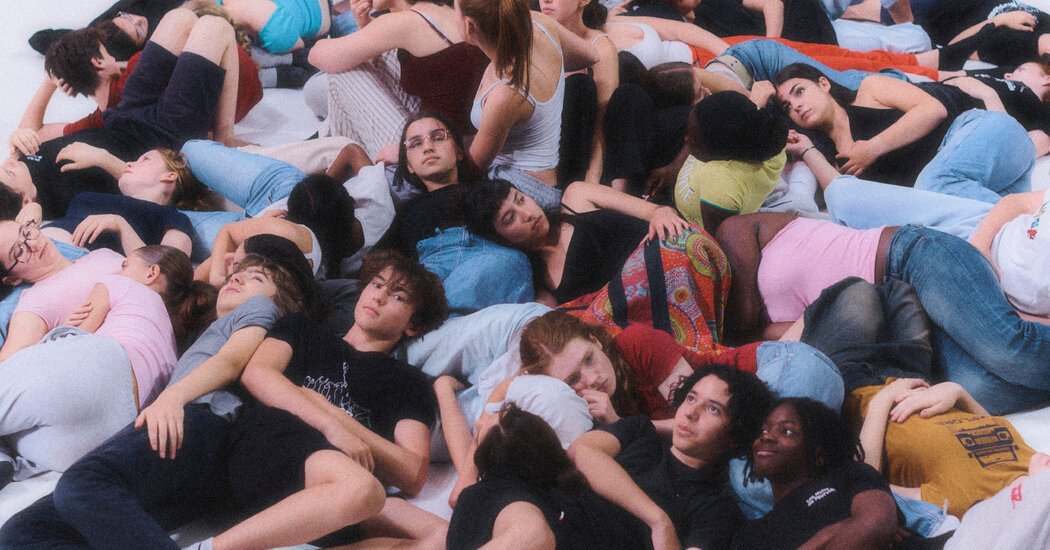
Beneath the soaring dome of the Panthéon, performers, dressed in black, spilled across a vast stage. Suddenly their bodies stopped and with it, the breeze in the air. Now still as sculptures, they began to shift their heads, gradually locking eyes with one another and with members of an audience that surrounded them on three sides.
Slowly, they lifted their arms like wings before swinging them down to smack their thighs, like a call to action. They took off in runs — not the polite, floor skimming runs of dancers but frenetic sprints of velocity and speed. Acrobats popped high into the air. The space, once quiet and solemn, was alive as bodies spread across it like rolling, rippling waves.
“Mobïus Morphosis,” created by the French-Algerian choreographer Rachid Ouramdane and performed in Paris in July, was extraordinary: A piece of art — a dance both soft and hard — surrounded by art in a French monument.
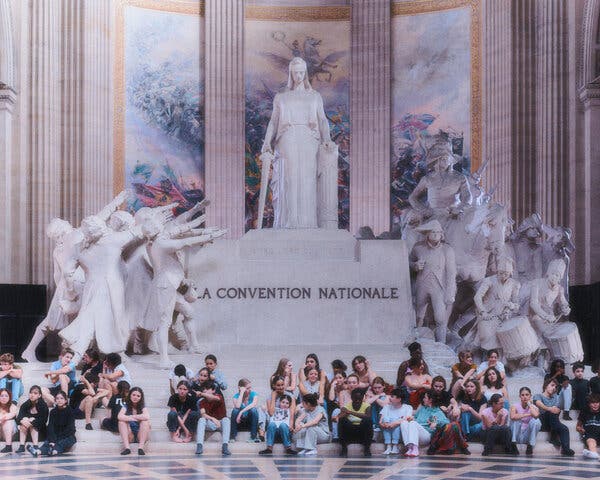
The Radio France children’s choir at the Panthéon during a rehearsal.
Ouramdane, 52, stands out in the dance world, not only for his vivid, poignant choreography, which uses dance as a way to put a spotlight on communities and people — sometimes marginalized ones — but also as a leader. In 2021, he was named director of the Chaillot, Théâtre National de la Danse, in Paris, one of five national theaters in France and the only one with a focus on dance.