Fashion
Shuffling Some Whimsy Into Poker and Blackjack
The familiarity of the 52-card deck has enabled video game designers to win over players with humor and randomness.
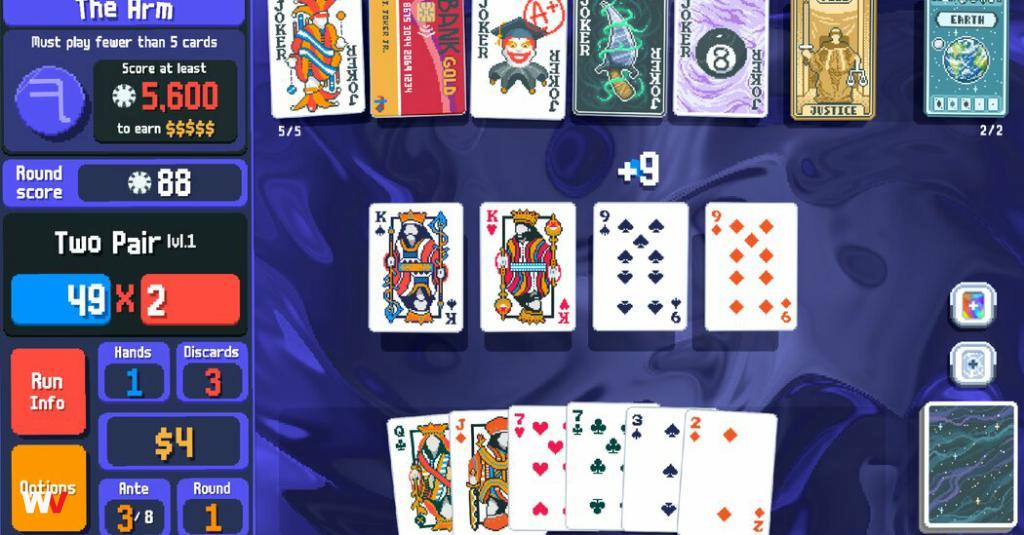
Few tools for killing time are as elegant or versatile as a deck of 52 playing cards, which for hundreds of years have provided a welcome excuse to gamble, puzzle, laugh or infuriate in idle moments. With the help of technology, video games are now finding delightful new ways to turn diamonds, clubs, hearts and spades into something stranger and even more charming.
Balatro, one of the year’s biggest hits, supercharges traditional poker hands with powerful joker cards that are unlocked at random. One makes diamond-suited cards worth four times as many chips; another awards more chips when your hand includes face cards. A “hanging chad” joker makes the first card you play count twice, in a winking nod to the 2000 presidential election.
Pile-Up Poker challenges players, in a burst of poker-meets-sudoku genius, to lay out as many hands as possible on a four-by-four grid. Dungeons & Degenerate Gamblers features increasingly absurd games of blackjack as players slowly fill their deck with a whimsical collection of other types of cards. (The Social Security card adds every card that your opponent discarded to your deck.)
Frank Lantz, a game designer and the chair emeritus of the N.Y.U. Game Center, said the shared cultural language of playing cards allowed players and designers to travel further together. Some may find it more appealing than an elaborate fantasy realm.
“Games aren’t just little simulated worlds that we drop into,” Lantz said. “They are systems that we design and interact with in order to explore them in a particular way. So that familiarity is necessary and powerful.”
After a few irresistible rounds, Balatro stops being a game about poker hands and becomes more about collecting a set of jokers that bends the rules in your favor. It is a perfect pairing: all the wonderful probabilities that have kept people playing cards for centuries, plus the randomness of algorithms. And, of course, none of the tedium of shuffling.