Fashion
Review: Trust ‘Disclaimer’ When It Tells You Not to Trust It
The seven-part series from Alfonso Cuarón, about a familiar theme of the treachery of narratives, is easier to admire than to enjoy.
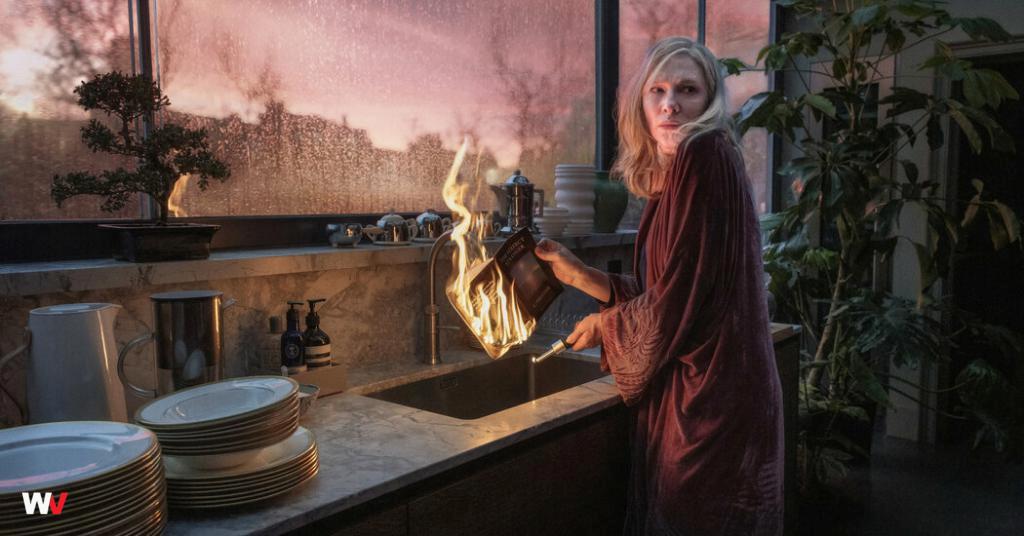
“Beware of narrative and form. Their power can bring us closer to the truth, but they can also be a weapon with a great power to manipulate.”
The warning comes early in the Apple TV+ thriller “Disclaimer,” as spoken by the journalist Christiane Amanpour. She appears in the series to present an award to a documentarian named Catherine Ravenscroft (Cate Blanchett), who is herself about to become the target of a malicious narrative intended to ruin her.
Plant your feet too firmly in your assumptions, Amanpour’s speech tells us, and you may take a tumble. Consider this the disclaimer of “Disclaimer.”
Audiences have already learned this lesson countless times — from “Gone Girl,” from “Rashomon,” from “The Affair,” from any number of stories-about-stories and tales of unreliable or competing narratives. But the warnings, overt and oblique, come repeatedly in “Disclaimer,” a seven-part adaptation by Alfonso Cuarón (“Roma,” “Children of Men”) of a 2015 thriller novel by Renée Knight.
This is the series’s selling point and its problem. It spends so much time and care building a trap with its meta-story that its actual story suffers in the process.
The aforementioned meta-story arrives at Catherine’s home in an envelope with no return address, in the form of “The Perfect Stranger,” a pseudonymously published novel that, she realizes with horror and nausea, details a terrible secret from her past. She is the book’s villain and its target. “Any resemblance to persons living or dead,” the front matter reads, “is not a coincidence.”