Fashion
Review: Seven Dancers, a Mosaic of Movement
Netta Yerushalmy’s “Movement” at N.Y.U. Skirball comes from a patchwork of sources: TikTok, television, marching band practice and more.
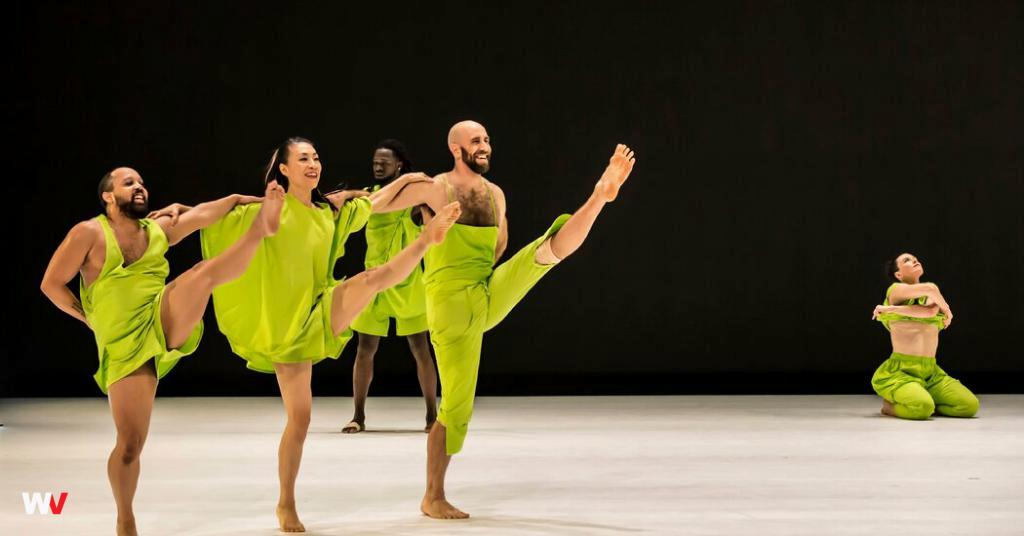
When a group of dancers gets together, they arrive with years of information stored in their bodies: layers upon layers of formal training and, like anyone else, of everyday experience just moving through the world.
In “Movement,” a performance that had its New York City premiere at N.Y.U. Skirball over the weekend, the choreographer Netta Yerushalmy dives into those repositories of physical knowledge. With a cast of seven dancers from varied backgrounds (and more who were involved throughout the creative process), Yerushalmy has assembled 70 minutes of intricate choreography largely culled from existing material, rigorously remixing moves already alive in the dancers’ bodies.
Yerushalmy has long been drawn to excavating movement that already exists, from her own childhood living-room dances captured on home video (as seen in her 2014 piece “Helga and the Three Sailors”) to canonical works of modern dance, like those she deconstructed in “Paramodernities,” her six-part series from 2018. “Movement” is a kind of doubling-down on the exercise of quoting or sampling. While raising questions about ownership and cultural context, it also illuminates the vast array of influences that even a small group of dancers can collectively hold and, poignantly, how these are learned and passed along.
The dozens of citations that make up “Movement,” some of which are identified at the end of the show, come from a patchwork of sources: dance competitions and classes; TikTok and television; marching band practice; the gym; school and family gatherings; religious rituals; pieces by other choreographers with whom the dancers have worked; Yerushalmy’s own past creations. Some connect to the dancers’ upbringings in Taiwan, Korea, Senegal, Israel and across the United States; others derive from their multifaceted freelance careers in New York City.
Depending on where you’re coming from, some of these references might instantly ring a bell. There are the cupped palms and contractions of Martha Graham technique; the hip-swaying strut of a voguing catwalk; the swiping arms of an Afro-Cuban orisha dance; the prance of the “little swans” from Swan Lake. But within the dance’s densely packed, diced-and-spliced structure, propelled by Paula Matthusen’s electroacoustic score, such moments of recognition are fleeting. No single image lasts long, as one inventive arrangement swiftly gives way to the next.