Fashion
Let the Organ Revitalize You
No, not that kind of organ.
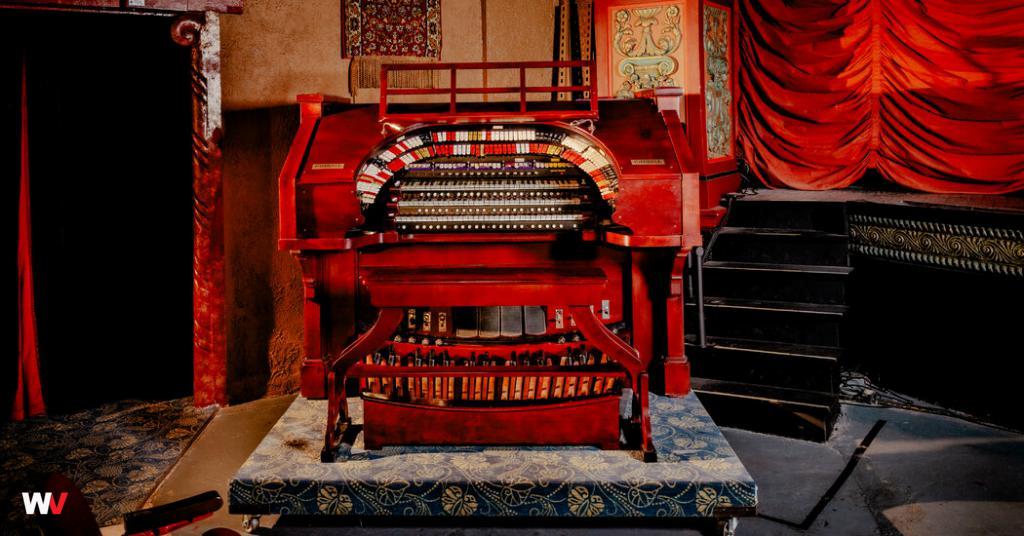
When I lived in Chicago, my wife and I would, whenever we could, see movies at a theater called the Music Box. Opened in 1929, the main auditorium has a ceiling painted to look like the night sky, a red velvet curtain that reveals the screen — and an organ. The organ is hard to miss: a massive brown Kimball console, right up there by the stage, with multiple keyboards and a half ring of red, white, black and yellow stops. Before films on weekends, a spotlight will beam and the house organist will play. On occasion, he will even accompany a silent film.
Organs used to be a central part of the moviegoing experience. Before the talkies took over, live musicians supplied the soundtracks for films. Unlike an orchestra, a single player on an organ could improvise and adapt to action onscreen. And the instrument, unusually versatile, could passably imitate a chicken’s squawk or a clap of thunder. It could be everything.
A friend of mine loves a different organ: the kitschy Wurlitzer at Organ Piper Pizza, a restaurant in Greenfield, Wis., where he went as a kid and now takes his own children. There were once more than 100 such “pizza and pipes” parlors in the United States, but now there are only three. These organs certainly err toward the silly; there are neon lights involved, and diners are probably not asked to leave if they request the theme from “Indiana Jones” over a Bach fugue.
Less silly are the more orthodox pipe organs that purists prefer, the analog constructions that represent something more profound for old institutions. Like the gleaming gold instrument, built by the premier 20th-century organ maker Ernest M. Skinner, at Yale University’s Woolsey Hall. Or the massive organ at St. Bartholomew’s Church in Manhattan, proudly declared to be the largest in New York City.
I am neither a player nor an expert, but you don’t need to be either to appreciate the organ. Scholars date the first one back to hydraulic systems in Ancient Greece; it’s speculated that European churches adopted them a thousand years later to wake dozing attendants. The pipe organ is massive and ornate. Whether used for worship or whimsy, you see it and know it means something bigger. The sound rattles. It hits you like a brick. It can be louder than an arena concert. In a capable organist’s hands (and feet), it induces fear or awe — but it can do so much more as well, reflecting “every shade of human emotion: love, anger, hate, sorrow, surprise, humor, ugliness, the sinister and national idioms,” as Skinner once put it.
When I was just 2 or 3 years old, my parents took me to mass at a tiny chapel across the river from our apartment in Arlington, Va. Before long, I demanded to be seated not in the pews but in the back of the room, next to the organist, Bob. My parents introduced me to Bob and let me sit on his bench as he played. I wanted shiny shoes, just like his. (Another demand they kindly accommodated.)