Fashion
How Can We Save the Best Parts of Our Cities?
In April 1969, two months before police officers raided a gay bar on Christopher Street in Greenwich Village called the Stonewall Inn, New York City’s Landmarks Preservation Commission designated the Village a historic district thanks to its …
In April 1969, two months before police officers raided a gay bar on Christopher Street in Greenwich Village called the Stonewall Inn, New York City’s Landmarks Preservation Commission designated the Village a historic district thanks to its rowhouses and spaghetti entanglement of streets, the serendipity of Colonial-era cattle paths and property lines colliding with the city grid.
Stonewall occupied a pair of former horse stables. During the 1930s, the site was a dive bar and restaurant called Bonnie’s Stonewall Inn, which shuttered in 1954. Three years later, the Genovese crime family reopened the bar, retaining the Stonewall sign and name. Gay bars were mostly mob-run back then because of laws against homosexual behavior in public. Police raids were typically settled with mob payoffs. They rarely turned violent.
But in the summer of 1969, patrons fought back.
The Stonewall uprising helped galvanize the gay rights movement. The bar itself shuttered shortly afterward. The Genoveses sold the property, which for a time morphed into a bagel shop. No one was talking about landmarking Stonewall then, but the city’s designation of the Village helped forestall various proposals to raze the building. Then in 2000 Stonewall was named a National Historic Landmark, and in 2015, designated a New York City Landmark. By that point, gay marriage had become the law of the land and a new bar using the Stonewall name, now spruced up for tourists, had taken over the space, with a museum next door.
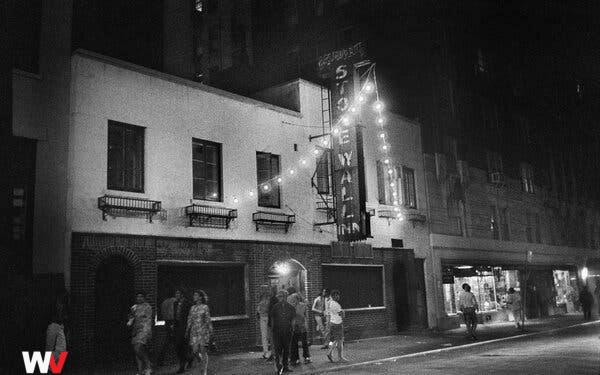
The Stonewall Inn on Christopher Street in Manhattan, 1969. Credit…Larry C. Morris/The New York Times
What exactly is preserved by the landmark designations?
The city designations mean that Stonewall’s current owners can’t alter the building’s brickwork or flower boxes or signage without permission from the Landmarks commissioners. The designation says nothing about the building’s actual use. Nothing about Stonewall’s landmark status prevents the building from reverting to a bagel shop or morphing into a dentist’s office or a nail salon.
So what do we mean when we designate something a landmark? It’s a trickier question than you might think.