Fashion
Did van Gogh Have a Goth Phase?
A major exhibition touring Europe argues that modern artists who turned to the dark side were inspired by Gothic art from the Middle Ages.
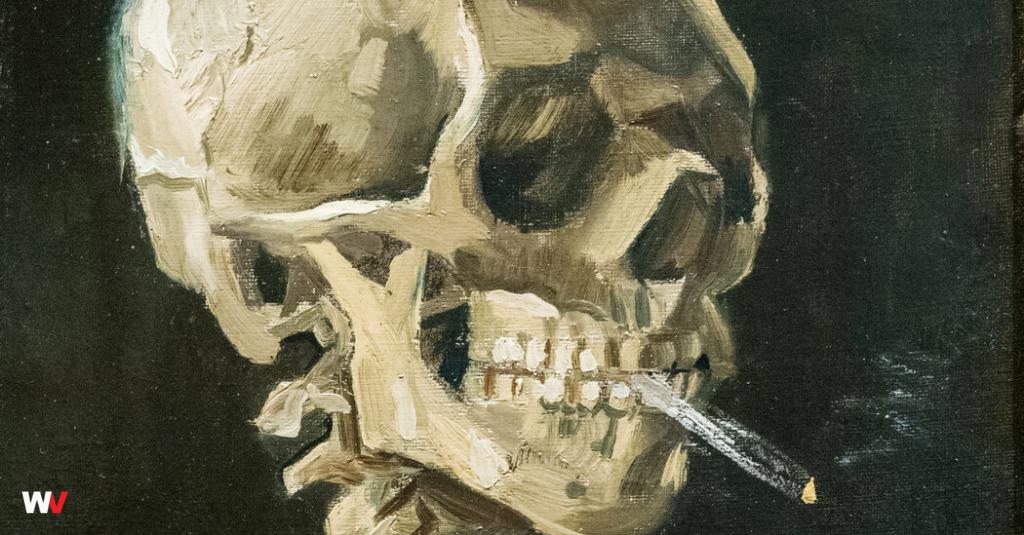
Why did Vincent van Gogh paint a skeleton smoking a cigarette? His 1886 painting doesn’t quite seem to fit into his larger output, one teeming with swirling landscapes and emotive portraits.
Some art historians have said that “Head of a Skeleton With a Burning Cigarette” was merely van Gogh, still an art student at the time, fooling around with an anatomy exercise. Anna-Maria von Bonsdorff, the director of the Ateneum Art Museum, part of the Finnish National Gallery, has another theory.
She thinks van Gogh was tuned in to a late 19th-century trend that revived religious symbolism from the Middle Ages. The skull referred to the Dance of Death, she said, a visual theme from the medieval era that reminds us death is always close at hand.
Van Gogh gave the allegory an update, von Bonsdorff said. “Because it has a cigarette, and it’s grinning, it has this very modern attitude,” she said. “It’s death in a modern setting, death as the dandy.”
“Head of a Skeleton” is one of the centerpieces of the exhibition “Gothic Modern: From Darkness to Light,” running at the Ateneum Art Museum in Helsinki through Jan. 26, 2025. The show, which will travel to Oslo after that, and then to Vienna, presents a new approach to thinking about modern art.
Students of European art history are often taught about a succession of 19th- and 20th-century art movements, radiating from the art capital of Paris: Impressionism became Post-Impressionism, which led to Cubism, and then the birth of abstraction. This relentless evolution of the avant-garde pushed culture into modernity, with ever more color and light.