Fashion
Danspace Project Pulls the Past Into the Present
History is integral to Danspace Project’s 50th-anniversary season. As part of “Danspace@50: The Work Is Never Done. Sanctuary Always Needed.,” a four-month festival of performances, screenings and conversations, spring programs pay homage to an older …
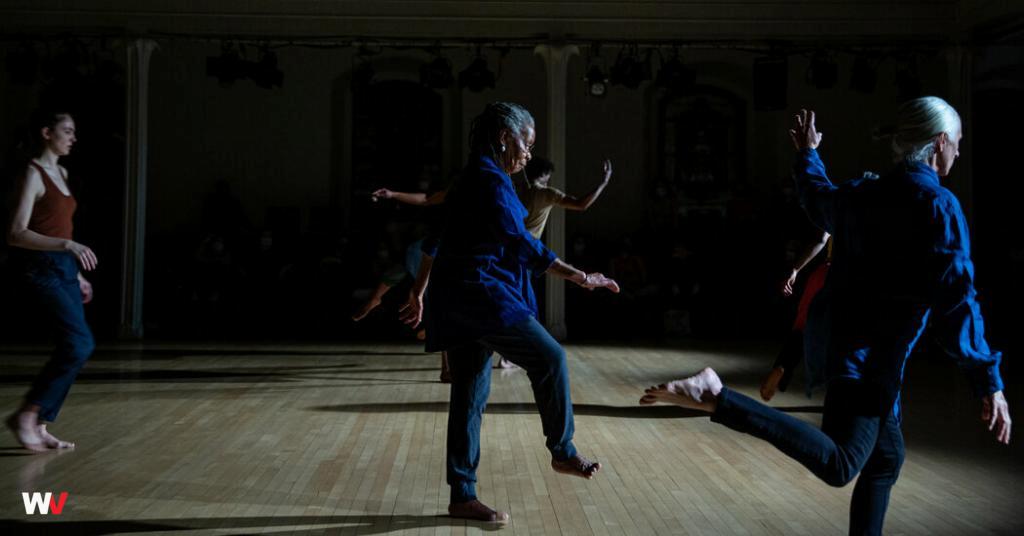
History is integral to Danspace Project’s 50th-anniversary season. As part of “Danspace@50: The Work Is Never Done. Sanctuary Always Needed.,” a four-month festival of performances, screenings and conversations, spring programs pay homage to an older generation of dance artists with fresh takes on notable works from their careers.
Dances can never really be brought back as they were. They exist in bodies, and each generation has a singular approach. How can the past be braided into the present? By bringing new dancers into the process, as works by Ishmael Houston-Jones and Fred Holland, Bebe Miller and Donna Uchizono have done. (In May, Marjani Forté-Saunders will present Blondell Cummings’s “Chicken Soup,” from 1981.)
Here is a closer look at the offerings so far.
Ishmael Houston-Jones: ‘OO-GA-LA Reimagined’ (Feb. 27-March 1)
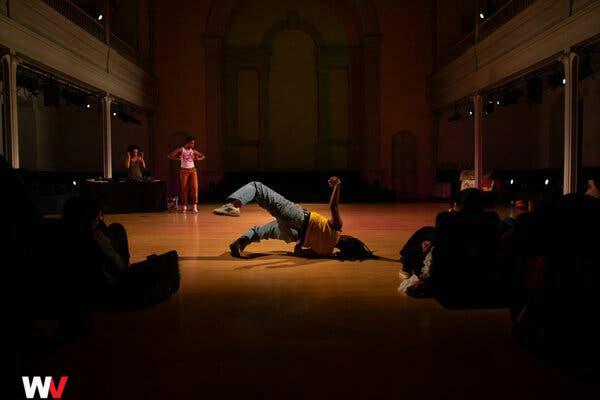
From left, Stephanie Hewett, Kris Lee and AJ Wilmore in “OO-GA-LA Reimagined.”Credit…Rachel Keane
In 1983, at a Danspace festival of contact improvisation, Ishmael Houston-Jones and Fred Holland came to break the rules and make their own. Most of the directives they wrote for their improvised duet “OO-GA-LA” were contrary. Since contact improvisation was normally done barefoot, they would wear punk boots; since it usually aimed for sequential flow, they would veer away from that and even avoid physical contact. But the start of their rule-breaking rule sheet was a simple assertion of difference: “We are Black.”
For “OO-GA-LA Reimagined,” the young Black artists Stephanie Hewitt, Kris Lee and AJ Wilmore created their own manifesto, identifying themselves as shape-shifting tricksters who would both revere their ancestors and “bite back.” That’s what they did, after footage of the original was projected and Houston-Jones danced a benedictory opening solo. (Holland died in 2016.) The 1983 performance, for all its radicalism, was subtle in its protean shifts; the new version was more flamboyant and freewheeling.
The three threw themselves around uninhibitedly, bouncing off, obstructing and pumping one another up. Much of their playful energy emanated from their turns at a D.J. station, mixing in classic dance tracks and gospel. Apart from their touching veneration of Houston-Jones, the spirit was irreverent — the best tribute. BRIAN SEIBERT