Fashion
Can I Go to Church When I Don’t Believe?
The magazine’s Ethicist columnist on separating belief from an appreciation of the arts and rituals produced by a religious organization.
I grew up in the Catholic tradition, but after obtaining several university degrees — including one in religion — it became clear to me that Jesus wasn’t divine and that the cobbling together of the Bible in the fourth century was a consummate work of spin-doctoring. I have about 20 arguments in defense of this, not the least of which is Christ’s inefficacy. After 2,000 years, his followers have split into thousands of sects, many of whom have shot and killed members of rival sects. Think of Northern Ireland, World War II. It doesn’t seem to me the way an omnipotent deity should operate.
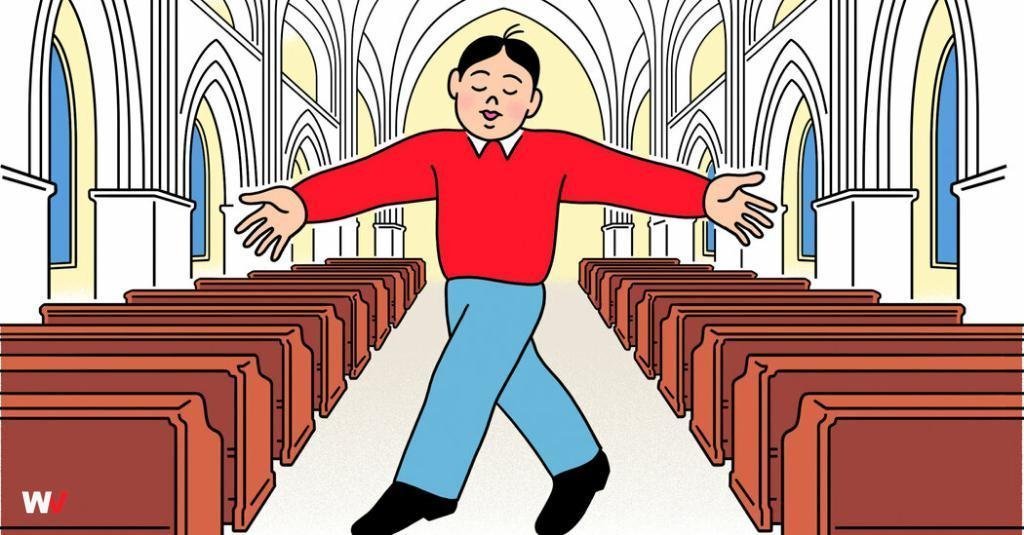
But boy, oh, boy, do I love the artistic output of Christianity. Bach’s B-minor Mass, the Fauré Requiem, St. Paul’s Cathedral — all these lift my spirit. I love a beautiful Christian service.(Where else do you hear an organ like that?) Actors talk about ‘‘working from the outside in,’’ in which a physical position unlocks inner emotions. For me, kneeling does this. I don’t pray, but the act creates humility and gratitude. It does me good. Then there’s the lovely sense of community in a congregation.
I’ll never be converted. So I guess I’m lying when I turn up at a service and recite the Creed and sing the hymns as lustily as anyone else. Am I hurting anyone by doing this? Is it, for want of a better word, a sin? — Name Withheld
From the Ethicist:
A church representsa confluence of practices, beliefs and community, and its congregants will be drawn for all sorts of reasons. No doubt you’re participating in these services in a different frame of mind from many others who are there, but Catholics have long been aware of the aesthetic appeal of their tradition’s art, music, architecture and liturgy — an aspect of the via pulchritudinis, or way of beauty, that Pope Francis has invoked. As for reciting the Nicene Creed: You might inquire what exactly your neighbors on the pew think it means to be of one substance, or consubstantial, with the Father.
Of course, you could always visit churches, like those of the Unitarian Universalists, that explicitly reject creeds and that expect some members of the congregation to be atheists. They have hymns, too. But if the way of beauty leads you to the Catholic services of your upbringing, you shouldn’t feel as if you don’t belong, however deep your doubts. There’s no saying what a service means to any one of its participants. So your presence and participation can hardly be taken as a declaration of any particular creedal commitments. If the issue of faith comes up, you can freely tell your fellow congregants, ‘‘I’m not really a believer, but I love these services.’’ They’re unlikely to object to your being there. Some might be in your situation; some might hope that your attendance could, contrary to your expectations, change your mind. Many clerics advocate ‘‘meeting people where they are.’’ They may think that you’re appreciating God’s work in your own faltering way.