Fashion
Bodies in Repose? Not These.
“Vital Signs: Artists and the Body” draws from MoMA’s 20th-century collection to show that identity is broader than physical form. But in skipping social media the show can’t go far enough.
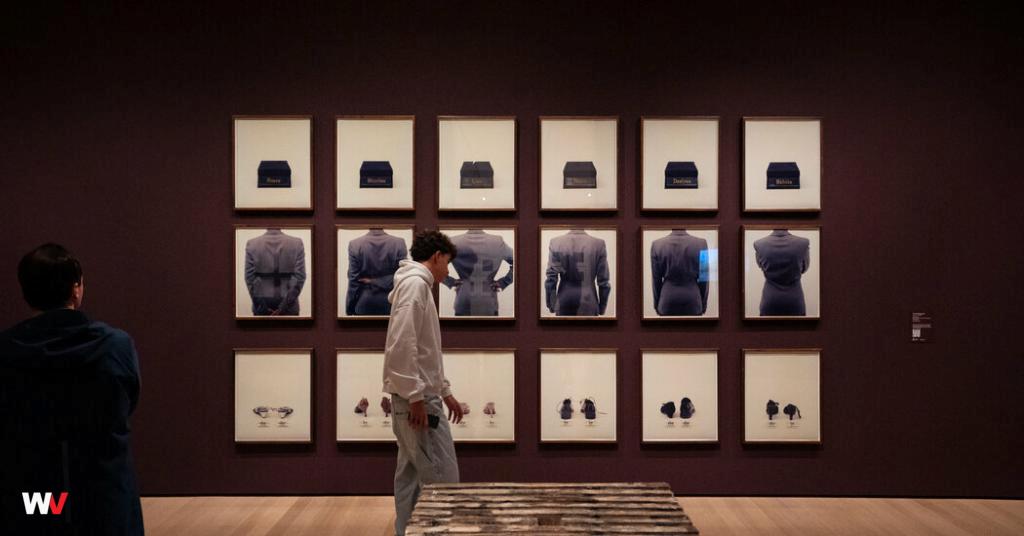
Any show about “the body” has the backhanded blessing of wide appeal. Everybody has one — so what? The thesis of “Vital Signs: Artists and the Body,” a survey of more than 65 modern and contemporary artists currently on view at the Museum of Modern Art, is more specific than its title suggests: It proposes that 20th-century artists used abstraction to explore the human body’s changeability, and press the limits of identity.
Lanka Tattersall, a curator in the museum’s drawings and prints department, frames the show as filling the gaps in art history, in particular the story of modern art as told by MoMA around midcentury, marked by the abstract self-expression of manly men, like Jackson Pollock and Mark Rothko. “Vital Signs,” instead, features a cross-racial and international selection of women and gender-nonconforming artists, nearly all from the museum’s collection.
There are fresh acquisitions such as twee body-horror ceramics (a woman merged with a book titled “Historia del Hombre,” or a cob studded with toothy lumps) by Tecla Tofano, a Venezuelan artist who died in 1997. Lynda Benglis is here, with a classic condiment-hued latex “pour,” an almost obligatory nod to 1960s feminist critiques of ab-ex excess. And there are happy surprises, like Mako Idemitsu’s video “Inner Man,” in which a mustachioed nude frolics over footage of a woman in a pale kimono.
It’s an understated show, shadowed with critical thinking. After all, many of the thorniest issues of the 21st century — immigration, trans rights, mass incarceration — are inextricably connected to the concept of the body: where a body comes from, how a person may change their body, which bodies are confined.
That is why it’s frustrating that the show mostly sticks to the 20th century, without reckoning with the complications introduced to its subject by the internet, social media and big data. “Vital Signs” wants to address timely debates around identity but feels stuck in art history.