Fashion
Best Art Books of 2024
The art critics of The Times select their favorites, from the biography of a “famously unknown” artist to an ode to the Louvre from 100 poets.
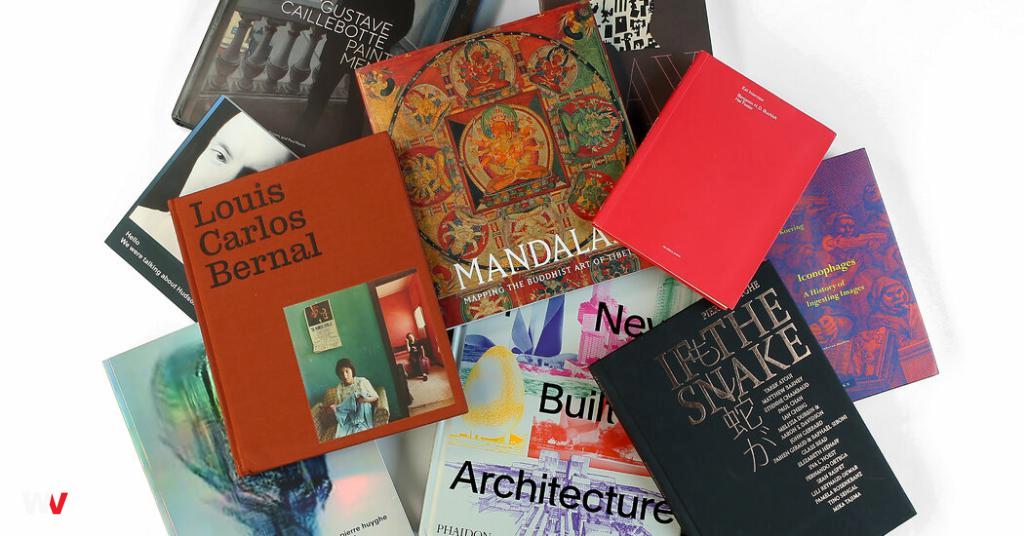
Say what you will about digital futures, print still rules when it comes to art books. And 2024 has brought us a batch of hold-in-your-hand beauties. They include a souvenir document of a highlight show from this year’s Venice Biennale; a jumbo compendium of architectural projects never (often for good reason) realized,a bouquet of tributes to a much-loved gallerist and a book-length exit interview with a veteran art critic: page-turners all. HOLLAND COTTER
Holland Cotter
‘A Book About Ray’ by Ellen Levy (MIT Press)
An extra-special artist deserves an extra-special book, and that’s what Ray Johnson gets in Ellen Levy’s “A Book About Ray.” In the 1960s the art writer Grace Glueck called him “New York’s most famous unknown artist,” and he wore that distinction like a crown. Indeed, it shaped his life, which he conducted as a game of hide-and-seek — largely through the medium of “mail art” — with the art world and fame. For a long time the role of omniscient fugitive worked. But by the 1980s, he had pretty much lost his audience and moved to Long Island, where, on a cold day in 1995, he drowned himself, elusive — no goodbyes, no whys — to the end. Levy’s biography respects the mystery without fastening on it. Instead, she works on evoking the performative character of Johnson’s life in a biography that has a dancerly rhythm of feints and darts, goes off on tangents and doubles back, keeping her prose, like her subject, moving, changing. Like the life it records, the book is a brilliant turn in — highest compliment — a very Ray way.
‘Louis Carlos Bernal: Monografía’ by Elizabeth Ferrer (Aperture and the Center for Creative Photography, Tucson)
I first saw a handful of Louis Carlos Bernal’s lamp-bright photographs — tender portraits doubling as social documents — in the flag-planting 1990 exhibition called “Chicano Art: Resistance and Affirmation (CARA),” and then in group shows over the years, always hoping to encounter a survey. That’s what we get with this catalog for a retrospective at the Center for Creative Photography (CCP) in Tucson, Ariz. , through March 15. Born into a Mexican American family in Arizona, Bernal (1941-1993) earned an M.F.A. in photography in 1972 and became professionally active at the height of the Chicano civil rights movement. Early on he struggled with tensions between the roles of artist and activist documentarian, but resolved the divide in images that concentrate less on overt politics than on lived culture. In barrios in Southwestern United States, Mexico and Cuba, he photographed people in their streets and homes, though his most heart-melting pictures are of unpeopled domestic interiors. With their altars, family photographs and tabletop still lifes, these are images of political transfiguration.