Fashion
A Jaw-Dropping Show Gives Martha Diamond Her Due
In her cityscapes, a visionary Manhattan painter created delicate registers of light and shadow, and bravura expressions of abstraction and figuration.
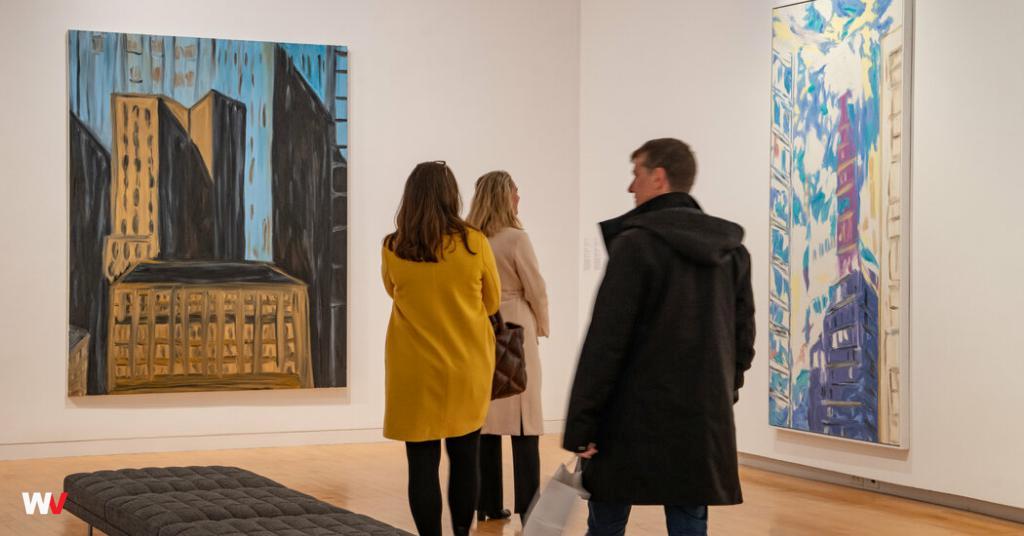
Martha Diamond didn’t exactly work in obscurity. A downtown painter who died last year at age 79, she went to college with the critic Peter Schjeldahl, credited the painter Joan Mitchell with changing her practice during a 1970 studio visit and had an early fan in Alex Katz. Her prescient painting of the twin towers as two plumes of smoke was even included in the 1989 Whitney Biennial. But the recognition she enjoyed was never quite in proportion to her achievement, and we can only hope that “Martha Diamond: Deep Time,” a small but jaw-dropping survey now at the Aldrich Contemporary Art Museum, will be the first step in her ascent into the upper reaches of art history.
The pieces that should have made her famous were the stripped-down views of Manhattan buildings she started painting in the early 1980s. In one way they were just portraits of the city where she was born, or romantic metaphors for the speed and energy of a scene still full of poets and painters. But they were also experiments in perception, delicate registers of light and shadow and, more than anything, bravura expressions of a unique, Gotham-flavored compromise between abstraction and figuration.
In 1973, when the Aldrich Museum’s founder, Larry Aldrich, bought the untitled quasi-landscape that leads off the exhibition, Diamond was still playing both sides of the question. A storm of green brushstrokes on the painting’s right half is hard to read as anything but a stand of trees. This turns the black strokes directly underneath them into soil, the dirty peach strokes next door into sand, and a nearby patch of light blue into water. All this recognizable reference to the natural world keeps the picture organized; it neatly ties together what might otherwise feel like a chaos of colorful marks.
But the loose vigor with which Diamond applied those marks makes clear that communicating a recognizable picture was actually the least of her concerns. She was after the sheer sensual appeal of the marks themselves — their color, their texture, the different ways they could be smeared across canvas. And while an imaginative viewer might find some wildflowers or pussywillows on the left, what that half of the painting looks like to me is simply an unconstrained burst of Abstract Expressionism.