

Fashion
A Choreographer’s Errands Into the Wilderness
The Greek-born choreographer Lenio Kaklea made her American debut at Governors Island, a fitting spot for work about the boundaries between nature and culture.
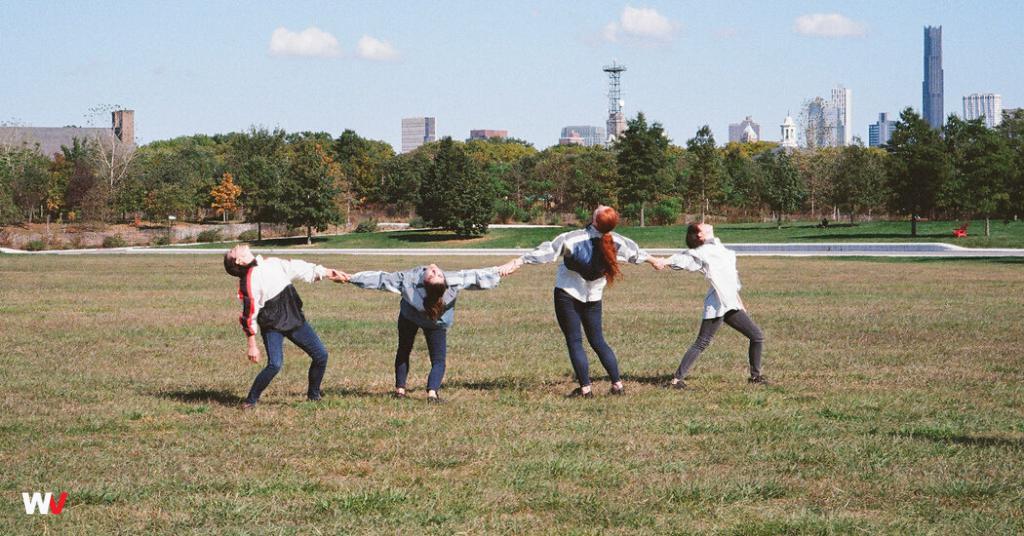
The choreographer Lenio Kaklea, born and raised in Greece, has made her career in France. On Saturday she made her U.S. debut on the ball fields of Governors Island in New York Harbor. This was an apt port of entry, as the work she brought — and another she presented later in the week at New York Live Arts — focused on the boundaries between nature and culture. (Both works are part of L’Alliance’s Crossing the Line Festival.)
On Governors Island, audience members gathered on the grass for “Analphabetes,” uncertain where to look for the performance or how to distinguish the performers from passers-by. Then four figures appeared on a hill in the distance, wearing retro windbreakers, as still as the trees around them. Like branches in the wind, they began to stir. Their moves, taken at the pace of tai chi exercises, progressed from arboreal to avian, arched like wings.
Slowly, they came closer, stork walking, posing on the ground. They operated independently, so that when they finally snapped into unison, it had a startling force. Not as startling, though, as when the dancers came within inches of viewers and stared in their eyes, staying blank faced as they blew up cheeks and stuck out tongues. What had been far away and nearly imperceptible became uncomfortably close.
Then the performers retreated again, breaking into a witty trot. The gestures from the beginning returned, this time with the dancers backed by the skyline of Lower Manhattan as they receded, in a relay pattern, into the distance once more over another hill.
“Analphabetes” means “illiterates” in French, but also “those without an alphabet,” like literate speakers of Chinese. The dancers’ gestures — sometimes animal in shape and rhythm, like those in the nature studies of Merce Cunningham — retained the quality of human signs. The whole thoughtfully designed performance was reminiscent of the outdoor experiments of Twyla Tharp and Trisha Brown in the 1970s, skillfully and somewhat ingenuously crossing lines that had been crossed long ago.
At New York Live Arts, Kaklea performed “Agrimi” (“Fauve”), Greek and French for “wild beast.” Where on Governors Island she was joined by three New York dancers, here her two colleagues were longtime Greek friends. The three began with sexy-beast moves cribbed from music videos: pulsing their hips, slapping their own backsides, grabbing their crotches, shaking on all fours.





