Fashion
A Charlie Chaplin Movie Like You’ve Never Seen It Before
The Museum of Modern Art has worked on a meticulous restoration of Chaplin’s 1918 film “Shoulder Arms,” screening on Thursday, that likely differs in every frame from what viewers have seen.
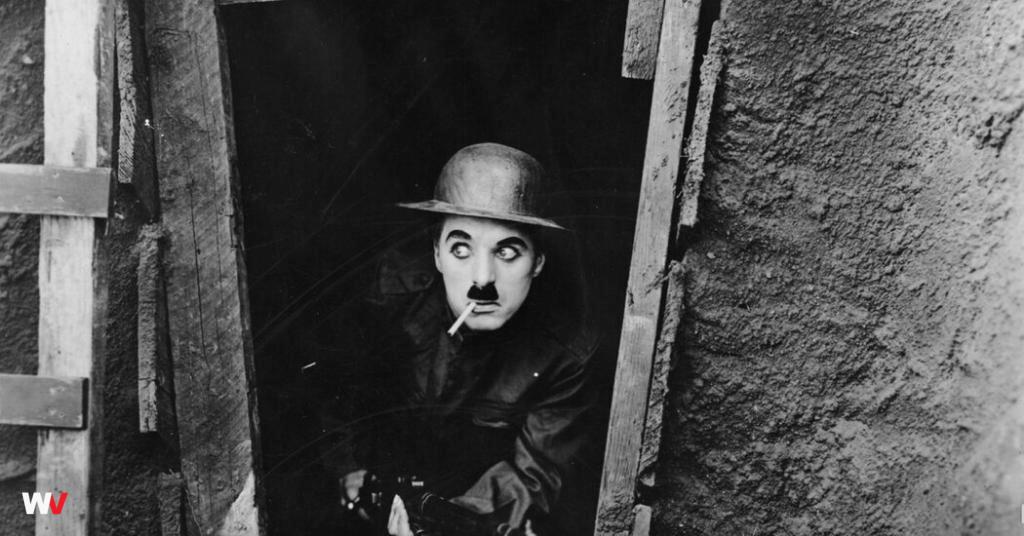
To Save and Project, the Museum of Modern Art’s annual film preservation showcase, will close on Thursday night with a screening of Charlie Chaplin’s “Shoulder Arms.” Starring Chaplin as an American soldier during World War I, this comedy, which runs around 40 minutes, has delighted viewers since its premiere in October 1918.
Yet every take and every frame in MoMA’s restoration, a work in progress, likely differs from what most moviegoers have watched in the past century. “It’s an unknown Chaplin film, in effect, that no one has actually seen as it was released,” said Dave Kehr, a curator in the museum’s film department. (Before joining MoMA, Kehr was a longtime contributor to The New York Times.)
The version that Chaplin distributed in the United States in 1918 is not the version that has circulated here for decades. Understanding why requires an explanation of how the film was made — and then, in a sense, remade.
Chaplin shot “Shoulder Arms” with two cameras, as was common practice in the silent era. Kodak had not yet developed a stock for making duplicate negatives, and Chaplin needed to create more than one negative to strike enough film prints to satisfy his worldwide audience. “A Chaplin movie was an event, even by 1918,” said Scott Eyman, the author of the recent biography “Charlie Chaplin vs. America.”
From the footage shot with the two cameras, Chaplin assembled four versions of “Shoulder Arms.” Foremost among these was what is called the A negative — the one that incorporated Chaplin’s preferred takes from his preferred camera angles. That negative was used to make film prints for American theaters in 1918.
For other markets, Chaplin created a B negative (his preferred takes from the unused camera angle), a C negative (his second-choice takes from his preferred angle) and a D negative (his second-choice takes from the other angle). This meant that audiences on different continents saw versions of “Shoulder Arms” that were close, but not the same.