Entertainment
Why Jackson Pollock Owed Everything to Claude Monet
A new biography of the French Impressionist argues that Monet himself owed everything to the three most important women in his life.
MONET: The Restless Vision, by Jackie Wullschläger
In the years before World War II, as modern art began to reach a broad international audience, a powerful origin story emerged about the 20th-century avant-garde. In this telling, the epochal revolt initiated by Picasso and Matisse had been spurred by a few trailblazing forebears — Paul Cézanne, Vincent van Gogh, Paul Gauguin and Georges Seurat, mainly. Notably left out was Claude Monet (1840-1926), whose shimmering Impressionist paintings had made the unstable act of seeing an end in itself.
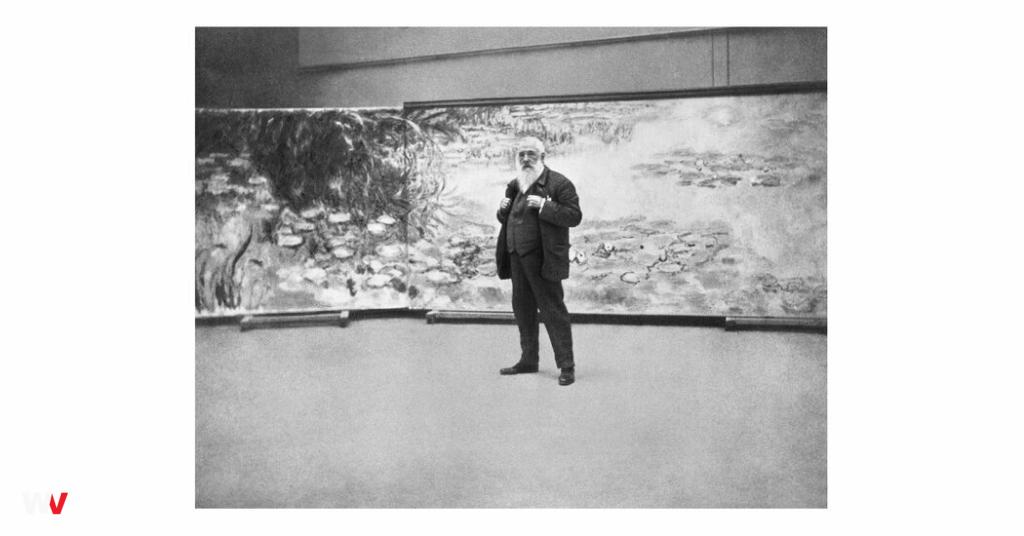
For all the recognition he received during his long life, Monet was essentially ignored after his death. For decades, his wildly abstract late work went unsold; his astonishing, immersive murals of water lilies — a gift to the French nation installed at the Orangerie in Paris — were rarely mentioned. In 1939, the art historian Lionello Venturi dismissed him as the “gravedigger of Impressionism.” Only in the postwar era did Monet begin to be rediscovered as the ur-modernist we know today.
In her lively new biography, “Monet: The Restless Vision,” Jackie Wullschläger offers a provocative explanation for this neglect. Partly, it was the artist’s longevity: At a time when Picasso and Braque were already creating Cubist papiers collés, the old man was still painting Japanese bridges at Giverny. More important, though, was the way his genius was understood. Stunned by Monet’s unerring vision and technical facility, his envious contemporaries tended to discount any deeper emotional or intellectual import. Édouard Manet called him “the Raphael of water”; Edgar Degas claimed that he was just making “beautiful decorations.” And then there was Cézanne, who declared that “Monet is only an eye, but what an eye!” — a judgment that, Wullschläger writes, “has distorted interpretation of Monet ever since.”
Following Cézanne, modern viewers have found it hard not to see Monet’s curling brushstrokes as the product of an almost Apollonian assurance. Every decade of his career, his paintings seem to evolve in brilliant leaps: the already fluidly refracted scenes of La Grenouillère, a day resort on the Seine, in 1869; the steam-filled Gare St.-Lazare paintings in 1877; the windswept rock formations of Étretat in the mid-1880s; the incandescent grain stacks of the early 1890s. But they also convey an unwavering resolve to capture fleeting light effects — what he called “instantaneity” — on a narrowing range of motifs. Even as war rages around him, he is tending his rarefied garden. To the wider world, Monet was a placid voluptuary, not a tormented rebel.
By excavating the artist’s unexpectedly messy inner life, Wullschläger, who is the chief art critic for The Financial Times, sets out to upend this view. Far from self-contained, she argues, Monet’s art was continually spurred, redirected, interrupted and sometimes stymied by “his joys and sorrows, loves and disappointments.” A republican atheist, he fled the Franco-Prussian War and broke with other Impressionists to support Dreyfus. He weathered numerous family tragedies. Above all, in Wullschläger’s view, were his tempestuous relationships with three women: Camille Doncieux, his long-suffering first wife and muse; Alice Hoschedé, the high-strung, devoutly Catholic companion with whom he shared a disreputable blended household; and Alice’s daughter Blanche, who, after Alice’s death, rejuvenated him in his final years. “Three times,” Wullschläger contends, “Monet’s art changed decisively when the woman sharing his life changed.”
It is not an easy case to make. Unlike van Gogh, who poured his private turmoil into searing letters to his brother, or Gauguin, whose scandalous existence could be inferred directly from his half-naked Tahitian subjects, Monet left few psychological traces. Not a single written word survives to or from Camille, who died after a long illness at 32. Alice’s letters to Monet, and parts of her diaries, were burned. Nonetheless, many of his own letters to Alice were spared, and Wullschläger makes artful use of these, along with his continual correspondence with artists, writers, patrons and other friends, to penetrate this carapace.