

Entertainment
What Satan’s Biographer Can Teach Us About Tyranny and Resistance
A new book about John Milton and “Paradise Lost” traces the 17th-century epic’s influence and relevance through the ages.
WHAT IN ME IS DARK: The Revolutionary Afterlife of Paradise Lost, by Orlando Reade
Cast out of America in 1952 as a political subversive, the Trinidadian historian C.L.R. James was imprisoned for a time at Ellis Island while he challenged his deportation. From his cell, James — the author of “The Black Jacobins” (1938), still the seminal history of the Haitian Revolution — had a view of Manhattan’s glittering skyline. This episode inspired him to write “Mariners, Renegades and Castaways,” an unusual book of literary criticism that read the American character through “Moby-Dick.” According to James, there is always an impulse toward American totalitarianism as embodied by someone like the narcissistic and megalomaniacal Captain Ahab, content to use anyone as a means to an end.
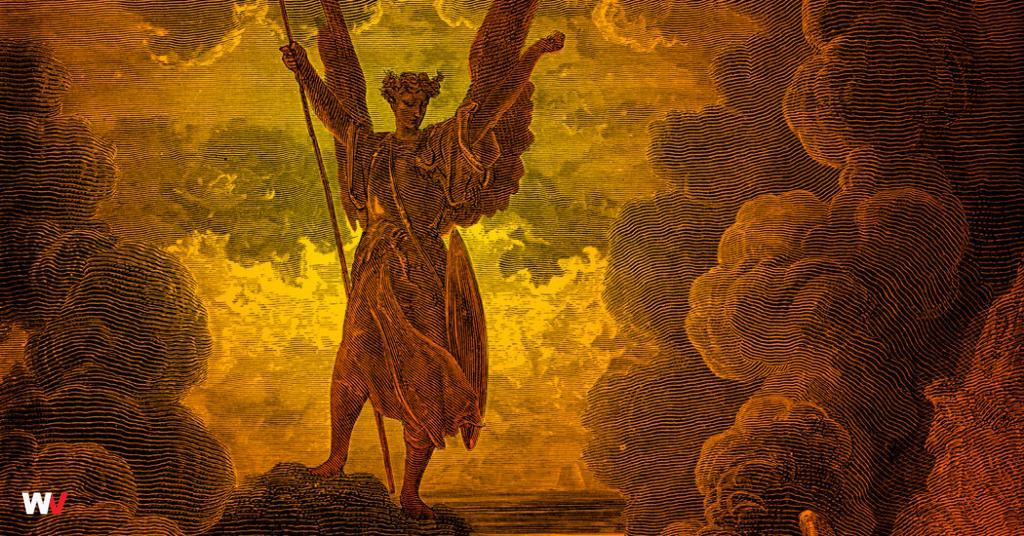
Orlando Reade’s enlightening and enthusiastic new book, “What in Me Is Dark: The Revolutionary Afterlife of Paradise Lost,” resurfaces James’s work to make the point that, in the Luciferian figure of Ahab, Herman Melville had foreseen the “rise of a personality who, in championing American values, would lead America astray.” Melville was an adept reader, and Ahab can be traced directly back to the subject of Reade’s study, John Milton and his rendering of Satan in the 17th-century epic “Paradise Lost.”
This year marks the 350th anniversary of both Milton’s death and the printing of the 12-book edition of “Paradise Lost.” A 10,000-line blank verse retelling of Satan’s rebellion against God, the subsequent war in heaven and the temptation of the first couple in the Garden of Eden, “Paradise Lost” is a maximalist doorstop, a touchstone wherein Milton promised “things unattempted yet in prose or rhyme,” but also a work that, as Dr. Johnson quipped, nobody wished longer. Yet as Reade emphasizes, “Paradise Lost” is also a radical story, a complicated and at times ambivalent testimony about tyranny and resistance, liberty and revolution.
Reade, an English professor at Northeastern University London, offers an expansive history of the epic’s reception as it was interpreted and then put to use by figures as varied as Thomas Jefferson and Dorothy Wordsworth, Virginia Woolf and Hannah Arendt. “The political vision of ‘Paradise Lost,’” Reade writes, “went on to influence … revolutionary struggles in America, France, Haiti and elsewhere.” For those revolutionaries, Satan was sometimes a rebel to be emulated and sometimes a tyrant to be resisted, but Milton’s own republican convictions — built on the principle that “man over men/He made not lord” — were unassailable. An advocate for both free speech and regicide, Milton can seem stunningly contemporary in his politics (despite being a Puritan, of sorts), which has made “Paradise Lost” ever relevant.
Although the word “perhaps” does too much work in Reade’s interpretations — whether he’s conjecturing about George Eliot’s schoolgirl crush on the centuries-dead poet or Jefferson’s thinking of Milton while crafting the Declaration of Independence — “What in Me Is Dark” is a convincing brief for the revolutionary import of “Paradise Lost.” Reade is particularly illuminating when he writes about Milton’s influence on the Black radical tradition, explaining how the poet appears in the 1789 slave narrative of Olaudah Equiano, in the 1816 writings of the Haitian revolutionary Pompée Valentin Vastey and in the speeches of Frederick Douglass and Malcolm X. All of these figures “grasped something true about Milton’s poem,” about its deft understanding of resistance. As Malcolm X wrote in a prison letter to his brother, “When you think back over all of our past lives, only poetry could best fit into the vast emptiness created by man.”