Entertainment
What Makes the Far Right Tick?
STOLEN PRIDE: Loss, Shame, and the Rise of the Right, by Arlie Russell Hochschild On an unseasonably hot day in April 2017, a caravan of vehicles full of white supremacists rolled into Pikeville, Ky. The neo-Nazis, Knights of the Ku Klux Klan and …
STOLEN PRIDE: Loss, Shame, and the Rise of the Right, by Arlie Russell Hochschild
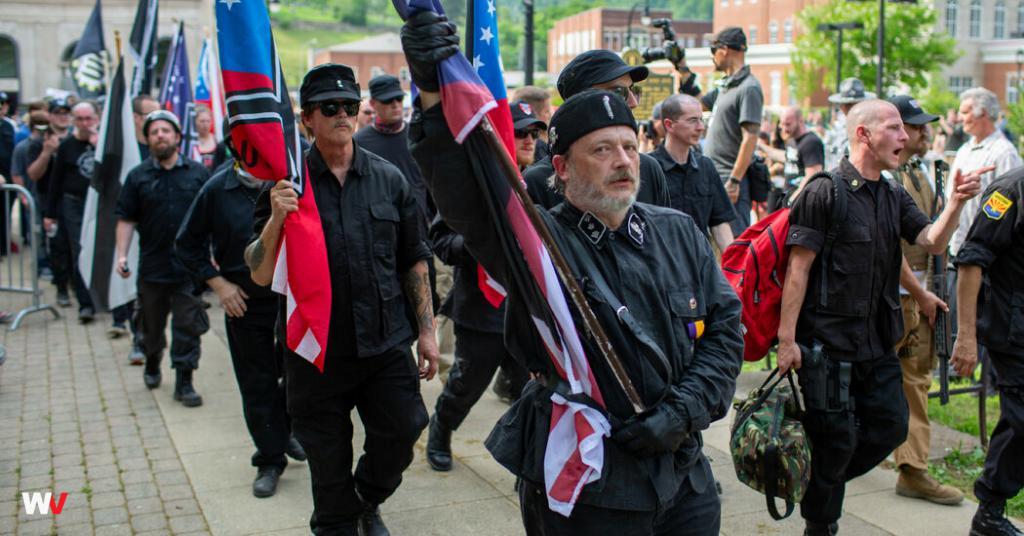
On an unseasonably hot day in April 2017, a caravan of vehicles full of white supremacists rolled into Pikeville, Ky. The neo-Nazis, Knights of the Ku Klux Klan and other self-described racists were emboldened by the election of Donald Trump and dressed to the hilt with jackboots, shields, sunglasses and firearms. They had come to recruit from America’s whitest congressional district, which is also one of its poorest and most conservative.
In “Stolen Pride,”the Berkeley professor emerita Arlie Russell Hochschild uses reactions to the white supremacist march as a window into the political and sociological shifts that have transformed the country. As she writes, “It occurred to me that a close look at this vulnerable patch of red America — Kentucky’s Fifth Congressional District — might offer clues to red America as a whole, and indeed to the winds of white nationalism blowing around the world.”
“Stolen Pride” is a sequel to Hochschild’s lauded “Strangers in Their Own Land,”which focused on working-class Louisiana supporters of the Tea Party during the Obama administration. That earlier book arrived in the months before Trump’s 2016 presidential win and was held up as key to understanding the constituency that had sent him to the White House. In her new book, Hochschild delves into Appalachia, the American region featured by Trump’s vice-presidential pick JD Vance in his memoir, “Hillbilly Elegy.”
This means that “Stolen Pride” will almost certainly be used by commentators to decode the sentiments of conservatives this election too. (Indeed, Hochschild herself launched this process with a recent essay in The Wall Street Journal.) What differentiates “Stolen Pride” from the glut of other commentary on Trump voters is Hochschild’s sustained attention to the economic and cultural factors influencing their emotions — especially their pride and shame. As Hochschild sees it, the residents of Pikeville are trapped in a “pride paradox.”
“On one hand, rural KY-5 Republicans felt fierce pride in hard work and personal responsibility,” she writes. “On the other hand, their beleaguered economy” — hollowed out by the decline of the coal industry, globalization and other economic shifts that favor urban Democratic America — “greatly lowered their chance of success and vulnerability to shame.” Trump, Hochschild theorizes, offered these voters a way out by telling them to be proud of themselves and blame others — liberals, immigrants, the federal government — for their failures.
In “Stolen Pride,”Hochschild updates the core of her previous book, what she calls her subjects’ “deep story” — the emotional narrative that they use to explain their lives. In this story, Hochschild explains, white, blue-collar conservatives feel that they had been waiting in line for the American dream only to have Democratic constituencies — educated women and minorities, for example — cut ahead of them. In “Stolen Pride,” Hochschild elaborates that those voters saw Barack Obama as a bully helping the line-cutters advance. Trump then emerged as the “good bully” who was strong enough to fight back.