Entertainment
What Is the Best Way to See the Violence in the Middle East?
THE WORLD AFTER GAZA: A History, by Pankaj Mishra Growing up in a Hindu nationalist household in India in the 1970s, the critic and author Pankaj Mishra felt great admiration for Israel, even as India’s leaders championed the Palestinian cause …
THE WORLD AFTER GAZA: A History, by Pankaj Mishra
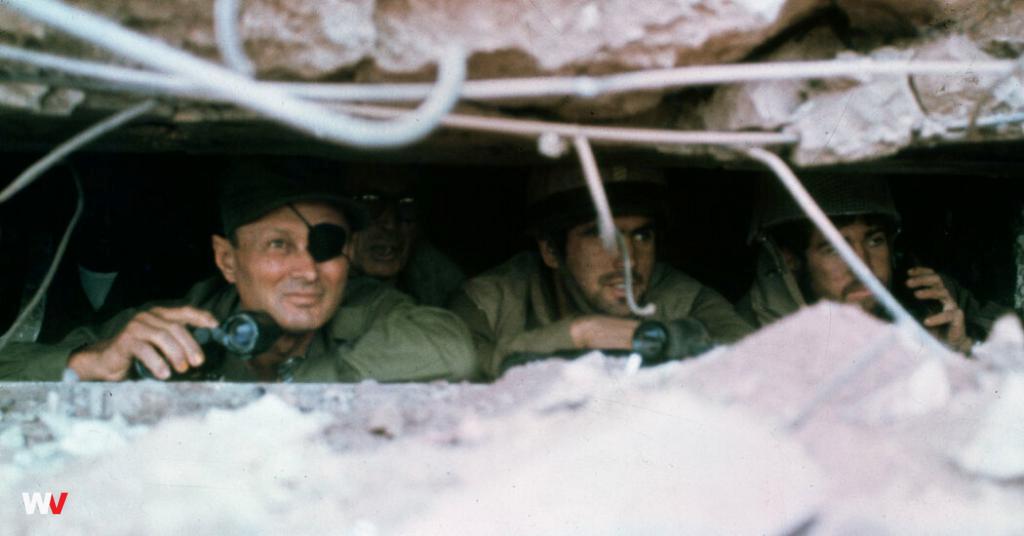
Growing up in a Hindu nationalist household in India in the 1970s, the critic and author Pankaj Mishra felt great admiration for Israel, even as India’s leaders championed the Palestinian cause. Encouraged by his grandfather, an ardent nationalist, he absorbed stories of Israel’s quest for statehood, respecting the determination of the Zionist movement to overcome formidable odds to create a state for the Jews, one that would grant them both safe harbor in a hostile world and an army with the unflinching will to strike its enemies. He even hung a photo of Moshe Dayan, Israel’s eye-patch-wearing defense minister during the 1967 Six-Day War, in his bedroom.
Mishra describes this education and his emergence from it in “The World After Gaza,” an exploration of the entwined threads of history, memory, identity and politics that he hopes will illuminate the significance of the war between Israel and Hamas. Even as his mind has changed, what has been consistent for Mishra is the way the violence in the Middle East has always been more than a narrow sectarian fight in one part of the globe. Tied up in the legacies of the great wars, the collapse of colonialism and the shadow of the Holocaust, it has always been freighted with other conflicts that act as mirrors. The deeper he delves, the more kaleidoscopic his reflections become.
To the Hindu nationalists around him, Israel’s resounding successes highlighted India’s failures. “In comparison,” he writes, “Hindu nationalism seemed like a tragedy: Deprived of a united country by Muslim separatists, softheaded Gandhi (and Nehru) allowed a catastrophic partition of British-ruled India in 1947 that led to the slaughter and rape of countless Hindus.”
But literature led Mishra to outgrow the lessons his family imparted to him. Reading critics of nationalism like the Indian playwright and Nobel laureate Rabindranath Tagore and the cultural Zionist Ahad Ha’am, he soured on what he now sees as an ideal of ethnic domination, in India and in Israel. This change in his beliefs accelerated during a visit to the West Bank in 2008, where he witnessed Palestinian suffering under the control of Israel’s military. He was “unnerved,” he writes, that their “persecutors were the West’s former victims,” and felt deep racial overtones that shook a writer from a formerly colonized land. Mishra saw the Palestinians as “people who looked like me, and who now endured a nightmare that my own ancestors had put behind us.” He returned home with an “awakened, affronted sensibility.”
This outraged, post-colonial attitude animates “The World After Gaza.” The book was written before the current cease-fire between Hamas and Israel began last month, but that likely would not have diminished the opprobrium he heaps on the Israeli government and the United States, which he criticizes for providing Israel with weapons that have devastated civilian life.
Mishra’s book is more than a memoir of personal growth. He hopes to “alleviate my demoralizing perplexity before an extensive moral breakdown” and appeal to “a solidarity between human beings” that transcends racial and ethnic divisions.