Entertainment
Trump Is Changing America From the Top. These Groups Did It From the Bottom.
A new book by the historian Linda Gordon considers seven social movements that transformed the country — not all of them for the better.
SEVEN SOCIAL MOVEMENTS THAT CHANGED AMERICA, by Linda Gordon
This is what political upheaval looks like when delivered from on high: The president of the United States directs the world’s richest man to descend on federal agencies and treat them like a private company, slashing funding and purging workers, with nary a peep from the Republican majority in Congress.
But as the standard-bearer of the MAGA movement, President Trump also owes his ascendancy to a political transformation that bubbled up from below. “Social movements have changed the world as often and as profoundly as wars, natural disasters and elections have done,” the historian Linda Gordon writes in “Seven Social Movements That Changed America.” They are entwined with democracy as both a product of mass political power and a factor in its spread. And even when they adopt the language of populism, they can also promote authoritarianism, at least for those people excluded from their ranks. One chapter in her book traces the revival in the 1920s of the Ku Klux Klan, whose middle-class recruits made virulent bigotry mainstream.
Gordon’s chapter on the Klan is an outlier in a book that is otherwise filled with 20th-century movements she admires. (Her previous work of history was “The Second Coming of the KKK.”) “Seven Social Movements” begins with settlement houses, which helped migrants and the poor get toeholds in the cities, and ends with the second-wave feminist groups Bread and Roses and the Combahee River Collective.
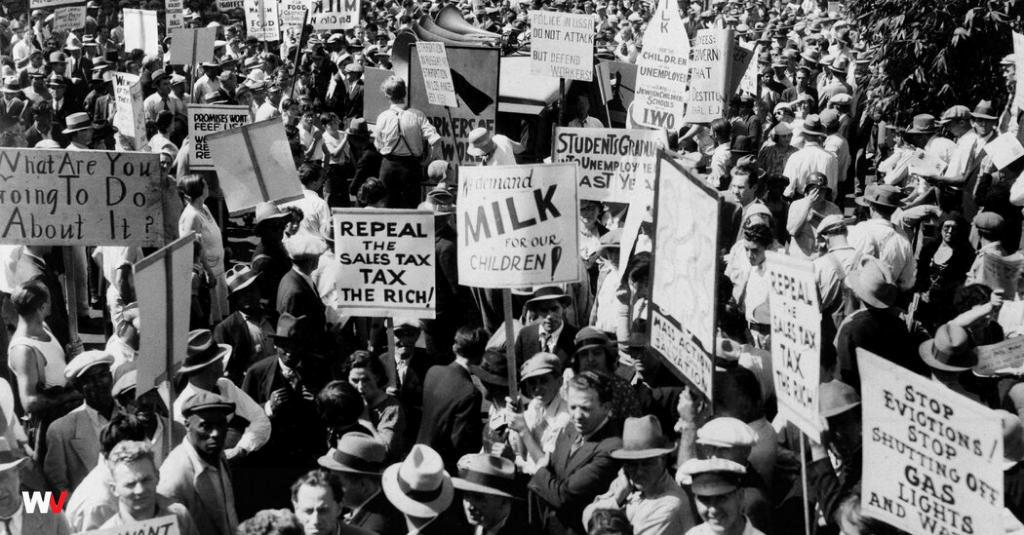
In between she explores the rise and fall of the 1920s Klan; the campaign for old-age pensions; the swell of activism among the unemployed during the Great Depression; the Montgomery bus boycott in Jim Crow Alabama; and the United Farm Workers union under Cesar Chavez. The variety of her examples means that her working definition of a social movement is necessarily imprecise: “large-scale, participatory activism, beyond electoral politics, aimed at social and political change.”
This big-tent approach makes it harder for Gordon to tease out common threads, but she does select a few. Charismatic leadership, for example, is often double-edged. It can be a galvanizing force, supplying a movement with crucial energy along with a sense of direction. She tells the strange, circuitous story of a doctor by the name of Francis Townsend, who — at the age of 67 — created what Gordon calls “the largest social movement of the 1930s” that also happens to be “the least studied social movement in American history.” Townsend’s call for pensions for the elderly culminated in the Social Security Act of 1935.