

Entertainment
Thrilling, Lush New Historical Fiction
Fagin the Thief by Allison Epstein You might be surprised to learn that Oliver Twist has nothing more than a walk-on part in FAGIN THE THIEF (Doubleday, 321 pp., $28). And even more surprised to learn that Dickens’s notorious villain emerges from …

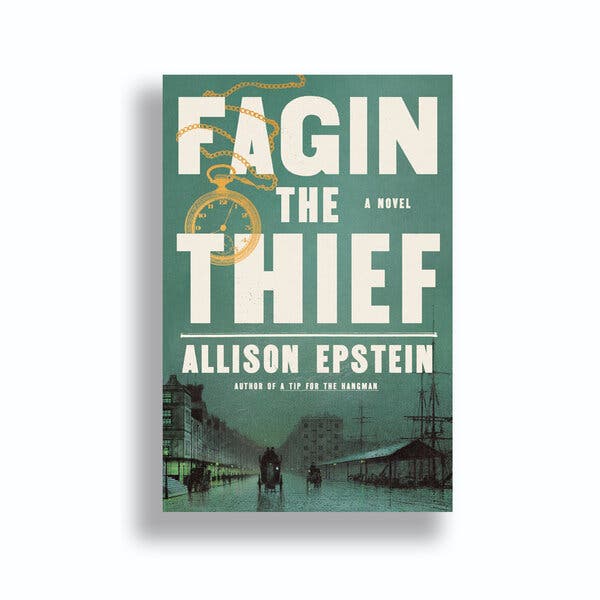
Fagin the Thief
by Allison Epstein
You might be surprised to learn that Oliver Twist has nothing more than a walk-on part in FAGIN THE THIEF (Doubleday, 321 pp., $28). And even more surprised to learn that Dickens’s notorious villain emerges from this reimagining of his origins as somewhat less villainous — still a sinister master criminal, but indelibly shaped by the prejudices of 19th-century London, where even as a boy he suffers “the natural consequence of being visibly Jewish and visibly poor.”
The narrative begins with a nod to Dickens’s novel, introducing us to a coldblooded middle-aged Fagin as he directs his gang of child pickpockets. Then, in flashbacks that intersect with some of what we remember from Dickens, we’re shown how Fagin got that way: his own youthful apprenticeship to a flamboyant thief, the terrible illness that killed his widowed mother, his professional partnering with warmhearted Nan Reed and her ill-fated attraction to his former pupil Bill Sikes, whose bond with Fagin has morphed into a “creeping cancer he called a friendship.”
In an author’s note, Epstein considers the most common ways that modern adaptations of Dickens have dealt with the antisemitic “Fagin problem,” remarking that “both of these options — sanitizing Fagin or disowning him — feel like a loss to me.” Instead she has created a deeply nuanced character, understandable if not wildly sympathetic, a loner who has learned a tragic lesson: “Iron hearts can’t break.”
The Delicate Beast
by Roger Celestin
“The bliss and the brutality” of a childhood in early-1960s Haiti are portrayed with dreamlike, then nightmarish, eloquence in Celestin’s autobiographical first novel, THE DELICATE BEAST (Bellevue Literary Press, 431 pp., paperback, $18.99).There’s a mythic feel to the larger context — the setting is known only as the Tropical Republic and Papa Doc Duvalier as the Mortician — which makes the precise detail of this depiction of a young boy’s privileged yet fragile life in a large upper-class family even more effective.
As the Mortician consolidates power, the routines of the family’s days “seem infinite even as they are coming to an end” in an onslaught of violence that will send the boy’s parents into hiding, then impoverished exile. After he and his brother join them in New York, the novel opens out into a more conventional consideration of rootlessness and alienation. The previously unnamed boy grows into a man, Robert Carpentier, but as he travels through Europe, establishes a career in academia and separates from his family he never entirely succeeds in walling off the past. “There was no second chance,” he ruefully concludes when the hoped-for shelter of his marriage crumbles, “no possibility of a life empty of damage.”