Entertainment
This Is Your Brain on Politics
A new book by the neuroscientist Leor Zmigrod explores the connections between brain biology and political beliefs.
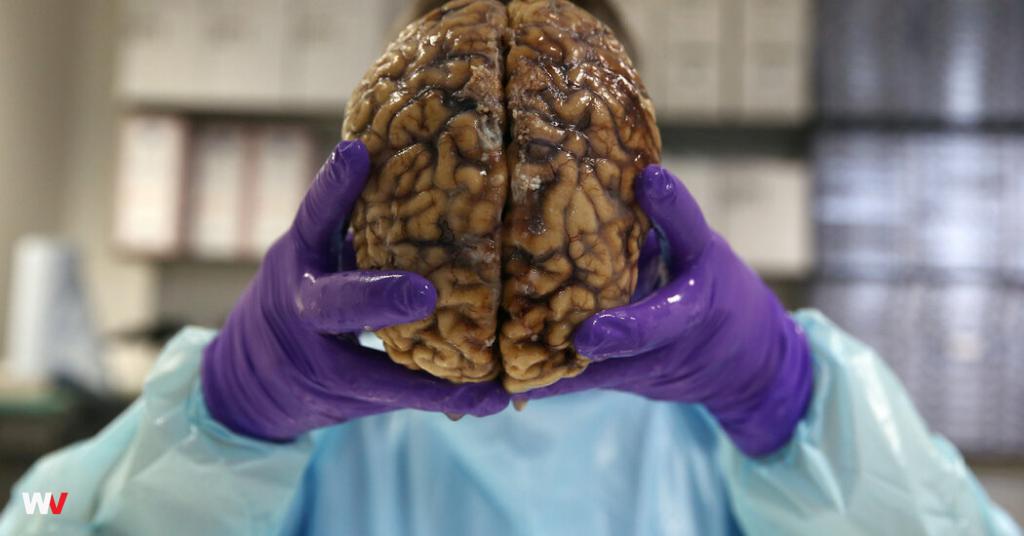
THE IDEOLOGICAL BRAIN: The Radical Science of Flexible Thinking, by Leor Zmigrod
Having a one-track mind can feel pretty good. “We possess beliefs, yes, but we can also become possessed by them,” the neuroscientist Leor Zmigrod writes in her lively new book, “The Ideological Brain.” We might talk a big game about “freedom” while also being terrified of the uncertainty that comes with it. It’s only human to yearn for the clarity provided by a system that tells us how to think and what to do: “Human brains soak up ideological convictions with vigor and thirst.”
Zmigrod says she knows this because she has studied the connections between the brain biology and political ideology. She began her experiments in the months between the Brexit referendum in Britain and the 2016 presidential election in the United States. Using a method called the Wisconsin Card Sorting Test, she tracked how her subjects responded to a sudden and arbitrary change in the rules. She also surveyed research on the amygdala, the almond-shaped structure in each hemisphere of the brain that processes emotions, especially negative ones like fear and disgust.
Conservatives, she says, often have larger amygdalae. Yet figuring out which comes first — whether people with bigger amygdalae are drawn to conservative ideologies, or conservative ideologies make people’s amygdalae bigger — “is an ongoing endeavor.”
The science, in other words, isn’t settled. Indeed, “The Ideological Brain” turns out to have surprisingly little that is definitive to say about the ideological brain. Zmigrod is an able guide through the thicket of scientific research, but her book necessarily includes a few “to-be-sure” paragraphs conceding that some of the most tantalizing findings haven’t been replicated. “The finest neuroscientific studies are built up slowly, iteratively and thoughtfully,” she writes. “Warnings and cautious qualifiers are rarely riveting (limits on our imagination seldom are), but they are intellectually honest.”
And intellectual honesty is ultimately what this book is about. Ideologues tend to be “cognitively rigid,” Zmigrod says. Their resistance to changing their minds makes them slow to adapt to new information that challenges their priors. She cites research conducted by the psychologist Else Frenkel-Brunswik, who fled Austria after the Anschluss. Settling in Berkeley, Calif., Frenkel-Brunswik set out to learn how, as she put it, “the ethnocentric child becomes a potential fascist.” She found that parents who fostered imagination and empathy encouraged their children’s cognitive flexibility. By contrast, parents who ruled with an iron fist produced children who welcomed the domination of others. For these children, “all relationships were unequal and inherently abusive.” They idolized strict fathers. Such worship was a way of “justifying their own oppressions, the militarization of their imagination and desires.”