
Entertainment
This Book on World War I Changed How I Think of Nonfiction
Paul Fussell’s 50-year-old survey of trench warfare deserves a new generation of readers, our book critic writes.
Paul Fussell, the historian and social critic, didn’t think much of optimism — or optimists. Told to have a nice day, he’d respond: “Thanks, but I have other plans.” He wasn’t always such an ogre. But Fussell, who died in 2012, had what George Orwell called “a power of facing unpleasant facts,” so much so that he took Orwell’s phrase and, in a memorable 1988 essay, unpacked it like a baleful shaving kit:
Fussell did some of this killing himself. He served as a second lieutenant with the 103rd Infantry Division in France during World War II; at 20 he was gravely wounded and received a Bronze Star and a Purple Heart. His memoir about this experience, “Doing Battle” (1996), is notably cleareyed and typically first-rate. Its subtitle — “The Making of a Skeptic” — is crucial when considering anything this inimitable and lethally witty man ever wrote.
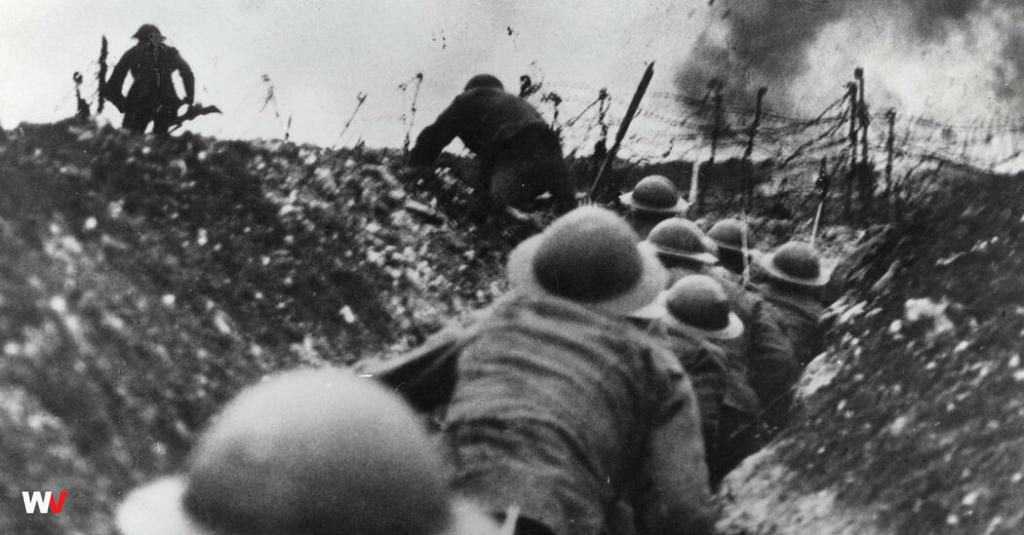
But the book that stands above the rest is Fussell’s “The Great War and Modern Memory” (1975), a bristling history of trench warfare on the Western Front during World War I, as seen through England’s soldier-writers. It blends form and function to audacious effect, and is Fussell’s greatest claim on posterity.
“The Great War and Modern Memory” turns 50 this year. It did not go unrecognized when it was published. It won a National Book Award and a National Book Critics Circle Award. In 1998, the Modern Library ranked it No. 75 on its list of the 100 best nonfiction books of the 20th century.
It now seems distressingly neglected. “The Great War and Modern Memory” is worth a revisit, and a new generation of readers. I would slide it forward, like a runaway checkers stone, at least 30 places on the Modern Library’s list, on writerly merit alone. It is filled with close and tragic perceptions, yet Fussell’s sentences crunch like tanks snapping woodland into twigs.
I first read it when young, and it is one of two books — Jessica Mitford’s “The American Way of Death” was the other — that changed my idea of what nonfiction could be and ruined me for most other writers. If Fussell could write this intrepidly about war, and Mitford about death, topics that have lent themselves to more lugubrious prose than almost any others, I thought, why couldn’t every nonfiction book — histories, biographies, memoirs — blend fact-finding with such high-stepping intellection, with such loathing for the bogus and with such literacy, glee and fury?