Entertainment
The Secret Lives of Vikings
In “Embers of the Hands,” the historian Eleanor Barraclough looks beyond the soap-opera sagas to those lost in the cracks of history.
By Timothy Farrington
Timothy Farrington is a former editor at Harper’s Magazine and The Wall Street Journal.
EMBERS OF THE HANDS: Hidden Histories of the Viking Age, by Eleanor Barraclough
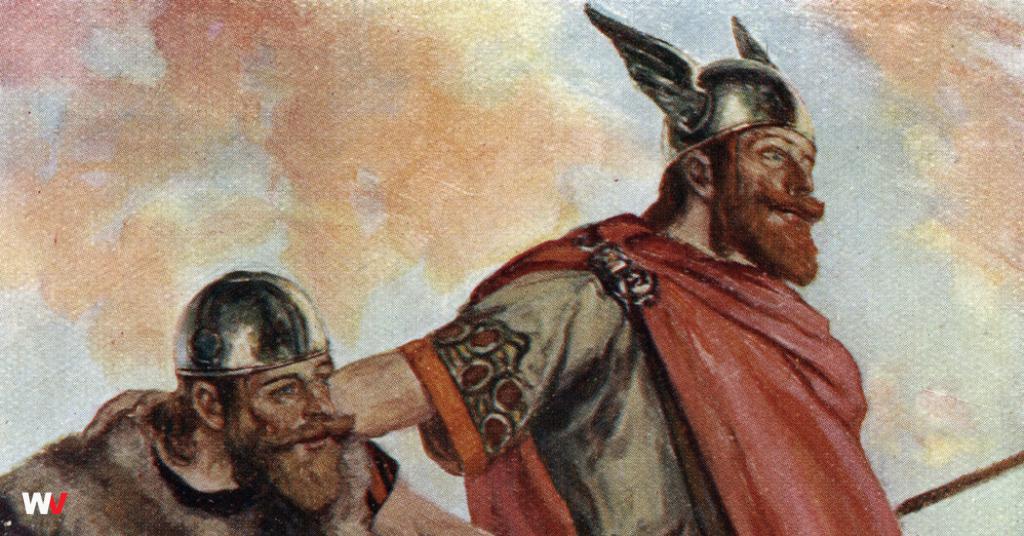
Vikings are one of history’s great cases of false advertising. The people we call Vikings mostly weren’t Vikings. The fierce mariners who swept out of Scandinavia in the late 700s and marauded for centuries through the North Atlantic and Baltic? They were only one part of a civilization defined by a shared language, Old Norse, in which víkingr just meant “raider.” As the historian Tom Shippey once put it, the term “wasn’t an ethnic label, it was a job description.” Talking about the Viking Age is like saying we live in the Navy SEAL Era.
All that is true enough, writes Eleanor Barraclough in “Embers of the Hands,” her survey of Norse life outside the longboat. Even so, she continues, “The ‘Age Roughly From 750-1100 C.E. During Which Those Primarily of Scandinavian Origins and Heritage Took Part in Raiding, Trading and Settlement Both Within and Beyond Scandinavia’ doesn’t have quite the same ring to it.”
People love the blood-soaked sagas that chronicle the deeds of (actual) Vikings. They love what Barraclough calls the “soap opera lives” of Norse gods. And they love colorful characters such as Erik the Red (who named his settlement project Greenland to make it sound enticingly lush) and Harald Bluetooth (after whom the wireless technology is named).
Barraclough, a British historian and broadcaster, focuses on the people left out of these “official stories,” on the aspects of life lost “in the cracks of history.” That mission, plus some jacket-copy hyping of “deeply subversive” “hidden” “secrets,” makes her book sound more revisionist than it is. In fact, it is complementary, not contradictory.
Barraclough relishes the sagas and the Norse wordplay known as kenning (“embers of the hands” is a kenning for gold). And she writes things like, “what would have been called, once upon a time, wenches” — using the antiquated word for effect even while keeping it at arm’s length.