Entertainment
The Fight to Save Googie, the Style of Postwar Optimism
In June, the Arby’s on Sunset Boulevard in Los Angeles shut down. The news, announced on the restaurant’s marquee — “FAREWELL HOLLYWOOD TY FOR 55 GREAT YEARS” — didn’t seem surprising, with rents and labor costs on the rise. What was out of the …
In June, the Arby’s on Sunset Boulevard in Los Angeles shut down. The news, announced on the restaurant’s marquee — “FAREWELL HOLLYWOOD TY FOR 55 GREAT YEARS” — didn’t seem surprising, with rents and labor costs on the rise. What was out of the ordinary was the public’s response to it.
Judy Sibelman, whose family had owned the business, said that she was overwhelmed by the “outpouring of emotion” from strangers. People wrote to the family “saying things like ‘I was a writer at one of the studios around the corner, and I would sit in a corner booth at Arby’s and write,’” Ms. Sibelman said. “One person even said they lost their virginity there. I certainly hope it was in the parking lot.”
On social media, people posted poetic, yearning odes — but not to the curly fries. They were more concerned about what would happen to the restaurant’s giant neon cowboy hat sign, a relic of the 1960s. One fan dramatically eulogized the sign on X, calling it a “garish dreamcatcher” that represented “abundance and continuity amid a roaring void.”
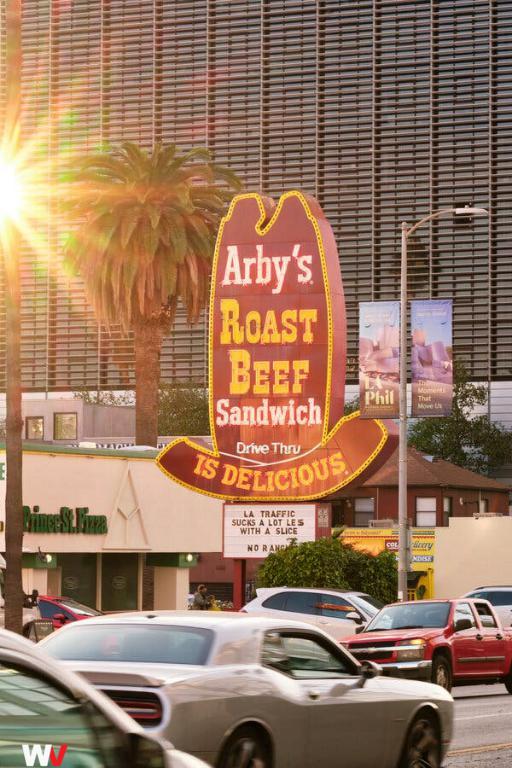
After more than 50 years in business, the Arby’s on Sunset Boulevard closed in July.Credit…Ashok Sinha for The New York Times
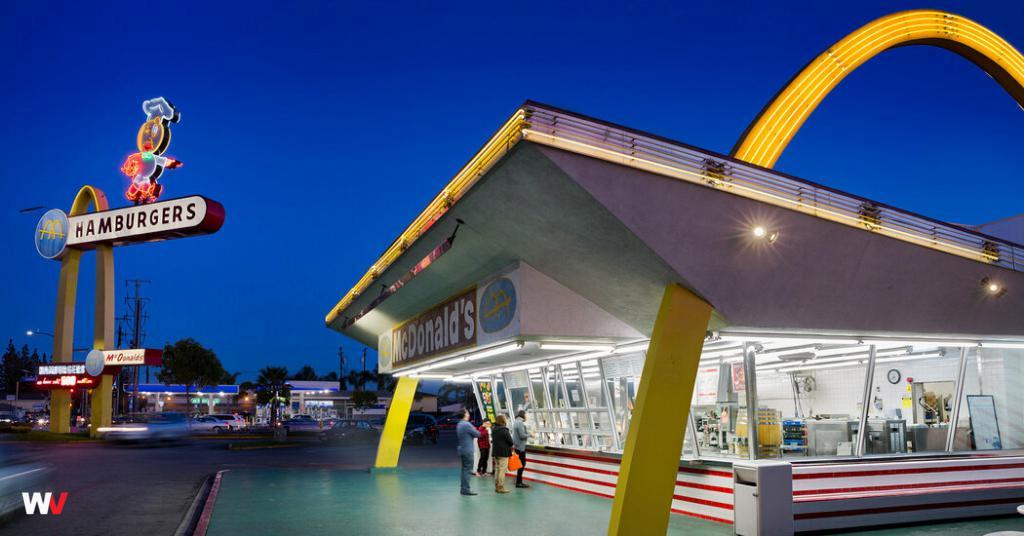
That cowboy hat is an example of the architectural style known as Googie (pronounced ghoo-ghee, with two hard G’s), which was popular from the 1940s to the 1970s. A product of car culture, Googie had its origins in Southern California and was adopted widely by roadside businesses, including motels, doughnut shops and drive-ins. The style is defined by a futuristic, space-age look, with loud signs and dramatic rooflines to grab the attention of people driving by in cars.
Amid the homogeneous grayscape that we currently find ourselves in, the loss of the Sunset Boulevard Arby’s seemed to symbolize the loss of something greater — a time when public spaces were fun and wacky, and when something as humble as a fast-food restaurant was designed to stun.