

Entertainment
The Archives Tried to Erase Her Family. She Tells Their Story.
A new memoir by the historian Martha S. Jones combines a trenchant analysis of race and the historical record with a homage to other Black women scholars.
THE TROUBLE OF COLOR: An American Family Memoir, by Martha S. Jones
When Martha S. Jones was a student at SUNY New Paltz, she took a course called “Black Sociology” with Prof. James Bowen. It was the mid-1970s, and the first Black studies department, founded at San Francisco State University at the height of 1960s student protests, was less than a decade old. As part of the first generation of African-descended young people to engage with Black culture and history in the college classroom, Jones was excited for all that Bowen’s class could offer. Despite her fair skin and “hair too limp” (her words), she relished the chance to become “sisters of the skin” with her classmates.
Rather than camaraderie, however, Jones experienced a humiliating confrontation while giving an oral presentation on Frantz Fanon’s book “A Dying Colonialism.” Looking back on the incident in her consummately readable, lyrically rendered new memoir, “The Trouble of Color,” Jones, an award-winning professor and gifted historian at Johns Hopkins University, acknowledges that her Blackness was not the same as Fanon’s. “Fanon came of age in colonized Martinique and then through military service and medical training,” she writes. “Instead, my self-discovery began in that cinder-block and linoleum upstate New York classroom.”
Anxious to please and struggling through her first attempt at public speaking, Jones gave a mechanical recitation of Fanon’s work, inciting protest from her classmates. One of the most vocal critics was Ron, a “suitably brilliant, handsome and outspokenly confident” student, who scoffed, “Enough of this. We shouldn’t have to listen to this. She doesn’t even know where the French Antilles are.”
Jones, the author of multiple, field-defining works of African American history, understands this painful moment as a consequence of adolescent racial gatekeeping, predicated on the other students’ assumptions about her Blackness. But as an 18-year-old, she attempted to deflect the accusation of racial inauthenticity by saying, “Well … the French Antilles are in France.”
She eventually befriended Ron but never forgot what he spat at her: “Who do you think you are?”
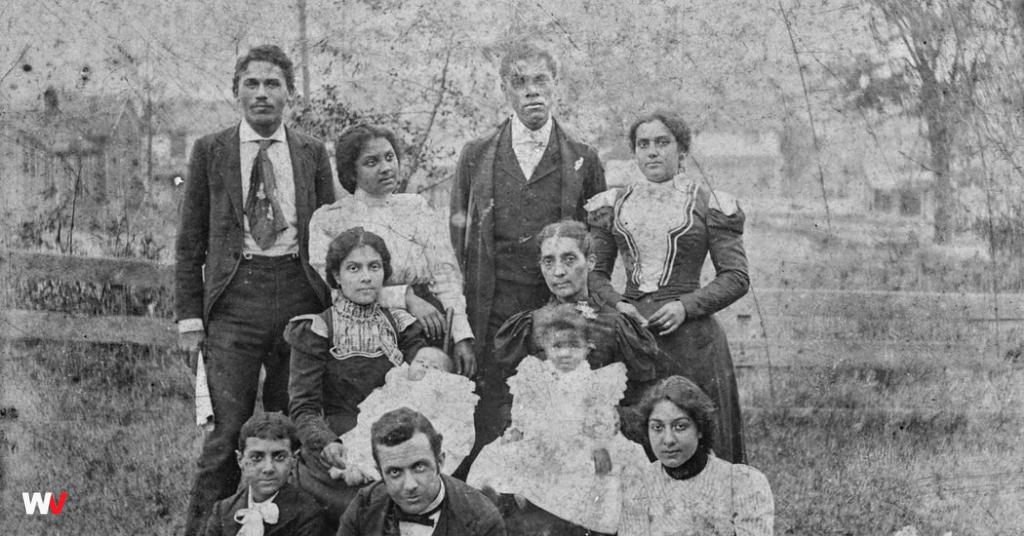
“The Trouble of Color” is an attempt to answer this question through a sophisticated analysis of race using Jones’s own family history as a prism, while implicitly arguing for the centrality of Black women scholars in the historical profession.