

Entertainment
Karl Marx, Weirder Than Ever
Indifference was the world’s first reaction to Karl Marx’s magnum opus. In 1867, when the first volume of “Capital”was published in German, it was greeted with such silence that the author’s best friend and patron, Friedrich Engels, submitted …
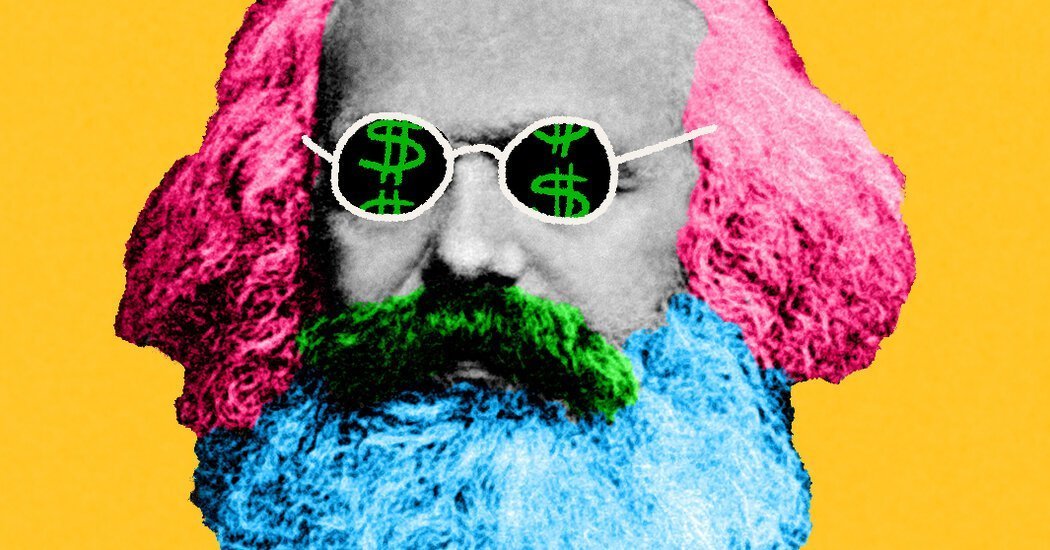
Indifference was the world’s first reaction to Karl Marx’s magnum opus. In 1867, when the first volume of “Capital”was published in German, it was greeted with such silence that the author’s best friend and patron, Friedrich Engels, submitted pseudonymous reviews, most of them combative, to the leading German newspapers, in a futile effort to drum up publicity.
“Capital” had been decades in the making, with Marx producing countless notes, drafts and mathematical equations he couldn’t make work to clinch an argument that capitalism would self-destruct, after creating the basis for something better. As the biographer Francis Wheen relates, Marx’s long-suffering wife, Jenny, was embittered by the public’s mute response to the book’s publication. “If the workers had an inkling of the sacrifices that were necessary for this work, which was written only for them and for their sakes,” she complained to a friend, “they would perhaps show a little more interest.”
Frustrated,Marx asked Engels, in one of the German reviews he wrote, to summarize “Capital” simply, using language that Marx helpfully supplied: It showed how “present society, economically considered, is pregnant with a new, higher form,” and it revealed in human civilization “the same gradual process of evolution that Darwin has demonstrated in natural history,” thus confirming the “doctrine of progress.”
It’s a sign of our times that the editor and translator of an eagerly anticipated new English edition of the book — the first major translation in half a century — largely ignore both Darwin and the idea of progress in their copious notes.
Still, no previous English version of “Capital”has featured such an erudite critical apparatus or such an exacting translation. It’s a remarkable achievement that forces readers to attend to the philosophical subtleties of Marx’s argument.
“‘Capital’is weird,” the editor Paul North writes in his introduction to the new edition (Princeton University Press, 857 pp., $39.95). The book’s translator, Paul Reitter, concurs, explaining how he has chosen to highlight what he calls every “programmatically weird moment in the text.” In “Capital,” Marx deploys neologisms that sound strange even in German, Reitter argues, with the goal of reflecting the way “capitalism makes the relations between people and things, and the relations among people, extremely unnatural and incompatible with human flourishing.”