Entertainment
In a Dystopian Nepal, an Earthquake’s Aftershocks Are Mostly Political
Samrat Upadhyay’s new novel, “Darkmotherland,” is a sprawling epic in which a natural disaster gives way to an authoritarian takeover.
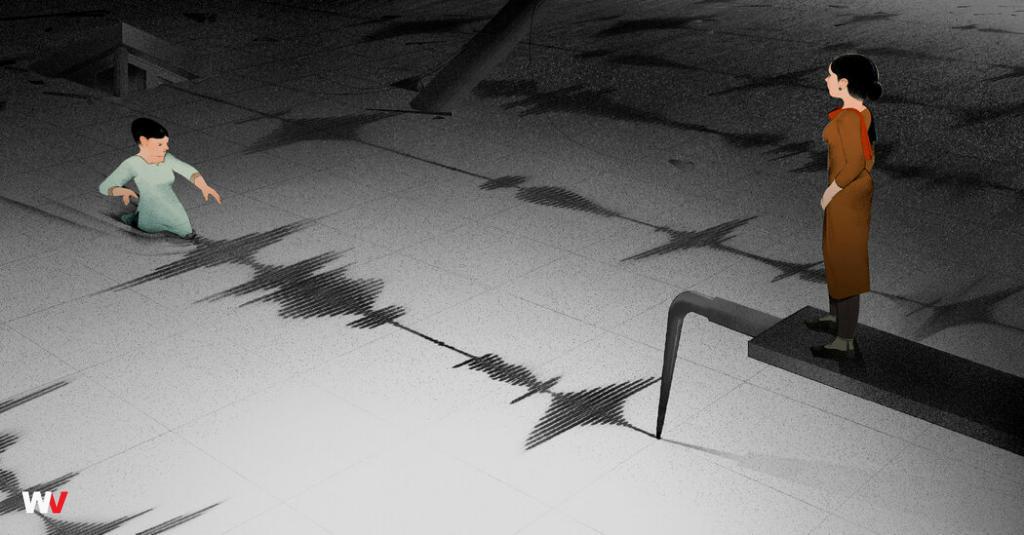
DARKMOTHERLAND, by Samrat Upadhyay
In a 1986 essay the American Marxist critic Fredric Jameson argued that every “Third-World” text necessarily functions as a “national allegory” for the “embattled situation” of that particular country. The Nepalese American novelist Samrat Upadhyay’s disturbing and wildly inventive new epic, “Darkmotherland,” translates that idea for a new context in which the social battles of a given moment are less nation-specific than they areglobal.
The story begins in the aftermath of the “Big Two,” an earthquake that has devastated the Himalayan mountain nation of the title. Already impoverished, dependent on tourist dollars and sundered along the lines of caste, class and gender, Darkmotherland is pitched by natural disaster into a dystopian present: As refugees try to salvage what remains of their lives in tent cities, an authoritarian leader known as P.M. Papa rises to rule over the ravaged nation with an iron fist.
As soldiers and policemen mop up those not intimidated by brownshirts, the only political opposition appears to be ragtag and largely ineffective — though its central figure is a feisty intellectual known as Madam Mao, with whom P.M. Papa has nurtured a stalker’s obsession since their early encounter as university students. Within these layers of social and political catastrophe Upadhyay folds the story of his two main characters, P.M. Papa’s gender-transitioning lover, Rozy, and Madame Mao’s depressed daughter Kranti, who marries the scion of the industrial Ghimirey family, who are closely allied to P.M. Papa.
The canvas is large, the backdrop colorful, and the subplots proliferate like those in a Dickens novel. The language, meanwhile, is a playful, often alliterative mélange of English, Nepali and street slang reminiscent of Salman Rushdie’s “Midnight’s Children.” It is tempting to read “Darkmotherland,” as Jameson might, as a kind of hallucinatory allegory of modern Nepal: with its violent lurch from monarchy to parliamentary democracy in the aughts; the civil war between the new parliamentary elites and the Maoist insurgents in the hills; the 2015 earthquake that killed thousands; and the conflicts between the Hindu caste system, various indigenous traditions, consumerist tourism and the desperate outflow of migrant labor.
But the scope of Upadhyay’s novel cannot be limited to what we now call the “global south.” His painstakingly detailed descriptions of contemporary authoritarianism and its exploitations resonate eerily with some of the wealthiest nations today. Right-wing nationalism, daily economic precarity and climate collapse are our common inheritance now, and P.M. Papa’s saffron-clad “Fundys,” with their informal policing of the public’s “morals,” evoke the toxic masculinity of Narendra Modi’s Hindu-Nationalist thugs as well as of American incels on 4chan.