Entertainment
Huck Finn’s Love Interest Tells Her Own Story
ADVENTURES OF MARY JANE, by Hope Jahren Earlier this year, the prolific writer Percival Everett released a critically acclaimed novel, “James,” that adopts as its conceit the story of Jim from “Adventures of Huckleberry Finn” as told by Jim himself …
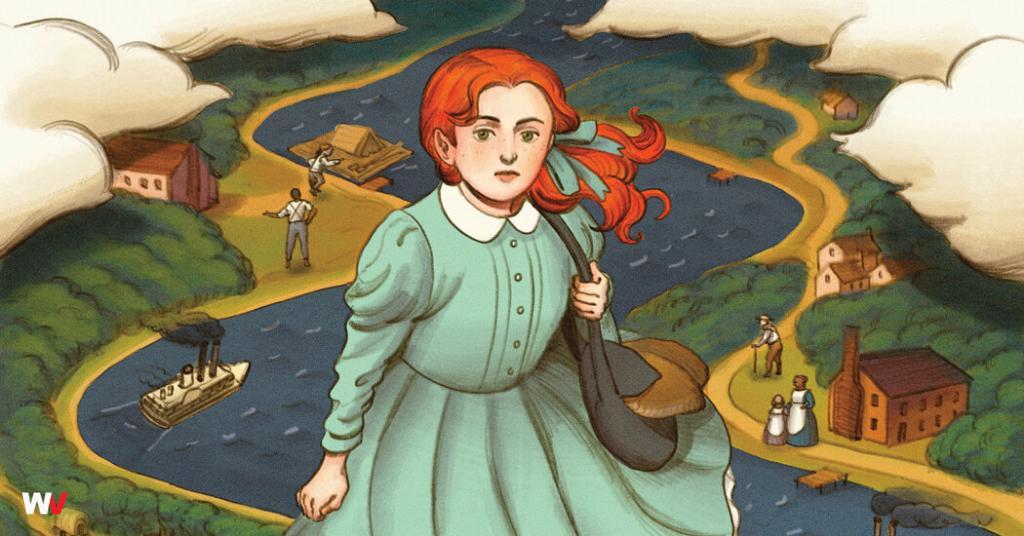
ADVENTURES OF MARY JANE, by Hope Jahren
Earlier this year, the prolific writer Percival Everett released a critically acclaimed novel, “James,” that adopts as its conceit the story of Jim from “Adventures of Huckleberry Finn” as told by Jim himself. Though its intended audience is very different from that of “James,” Hope Jahren’s first novel and first book for young readers, “Adventures of Mary Jane,” tries something similar. It’s framed as the first-person story of a much less prominent — one might say fairly minor — character from “Huckleberry Finn”: the object of Huck’s affection over the course of about 50 pages in Mark Twain’s 1884 classic.
“She had the grit to pray for Judas if she took the notion — there warn’t no back-down to her, I judge,” Huck tells us at one point in the original novel. “You may say what you want to, but in my opinion she had more sand in her than any girl I ever see; in my opinion she was just full of sand. It sounds like flattery, but it ain’t no flattery. And when it comes to beauty — and goodness, too — she lays over them all. I hain’t ever seen her since that time that I see her go out of that door; no, I hain’t ever seen her since, but I reckon I’ve thought of her a many and a many a million times.”
Appearing a little more than halfway through “Huckleberry Finn,” the 19-year-old Mary Jane and her cousins Susan, 15, and Joanna, 14, fascinate Huck and fall prey to the manipulations of others after their guardian and “benefactor,” Peter Wilks, dies and leaves behind a considerable estate.
Mary Jane never “sat right” with Jahren, a renowned scientist who won the National Book Critics Circle Award for her memoir, “Lab Girl.” “I just couldn’t square her gullibility (‘Take this six thousand dollars … and don’t give us no receipt for it’) with her deft execution of good-cop-bad-cop in Chapter 26,” she writes in her novel’s introduction. “Neither could I reconcile her passivity (‘You tell me what to do, and whatever you say, I’ll do it’) with the fact that a boy as intrepid as Huck falls so deeply in love with her. … That girl is up to something, part of me kept insisting.”
Or, as Mary Jane says at the end of the second chapter, “Trust me on this: When you find something lacking in a book that somebody gives you, there’s ways to sit down and fix it.” And fix it Jahren does.
Female characters don’t figure much, if at all, in “Huckleberry Finn.” Mostly, there’s Miss Watson and the Widow Douglas, two women who oversee Huckleberry’s domestication before he turns tail and sets out on his adventures with Jim, who will become his companion and protector as the two make their way south on the Mississippi River.