Entertainment
How Video Games Ushered In the A.I. Revolution
THE THINKING MACHINE: Jensen Huang, Nvidia, and the World’s Most Coveted Microchip, by Stephen Witt A challenge of writing a book on the tech industry, especially something as rapidly evolving as artificial intelligence, is that the story will be …
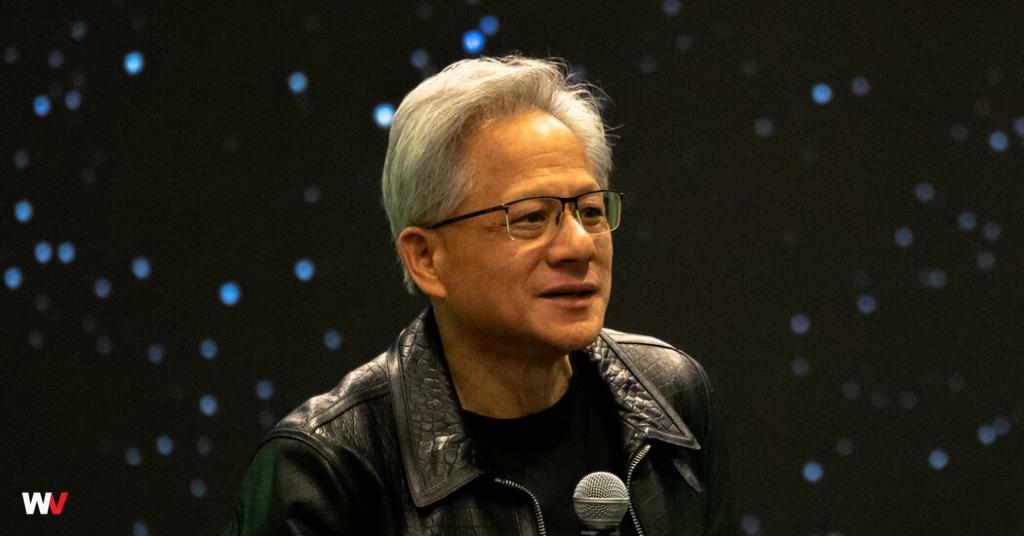
THE THINKING MACHINE: Jensen Huang, Nvidia, and the World’s Most Coveted Microchip, by Stephen Witt
A challenge of writing a book on the tech industry, especially something as rapidly evolving as artificial intelligence, is that the story will be slightly out of date in the few months between the final draft being turned in and the hardback hitting the shelves. You wish you could tell the future, but you’re stuck with what you have when you send the book to the printer.
For example, Stephen Witt’s “The Thinking Machine,” a lively biography of the C.E.O. Jensen Huang, whose company Nvidia makes microchips that power A.I. systems like ChatGPT, came out this spring, but it recounts events only up to a mid-2024 climactic showdown between the author and his subject over the possibility of A.I. destroying humanity, which means that a line that appears in an earlier chapter — about how Elon Musk differs from Huang in temperament — mentions that the Tesla C.E.O. has “at least” 11 children. That count is now woefully behind. By most estimates, he’s up to 14.
It also means Witt’s account doesn’t include the recent drama that arose after the release of a new A.I. chatbot from the Chinese company DeepSeek. A rival to ChatGPT, the Chinese chatbot was allegedly built for a fraction of the cost, with fewer fancy chips. This bucked the accepted wisdom that the only way to improve A.I. was to shovel vast sums of money at Nvidia to buy more and more of its hardware. When the markets absorbed this fact in January, Nvidia’s stock price tumbled.
Before that fall, however, there was an astonishing rise. The story of how Nvidia became the hottest investment on Wall Street and a household name is fascinating because its trajectory differs significantly from that of its Big Tech peers. For most of the time that companies like Apple, Meta and Amazon have been around, regular people used their products and services every day. But, unless you were a hard-core gamer, you probably hadn’t heard of Nvidia until recently.
Huang doesn’t offer Witt much on how his upbringing may have led to his current status as a technology apex predator (“I try not to analyze myself in that way,” he tells Witt), but there are early glimpses of his incredible drive and focus. In 1973, at 10 years old, he immigrated to the United States from Thailand and eventually landed in Oregon, where, between homework and shifts at Denny’s, he played competitive Ping-Pong at the national level.
By the early ’90s, popular video games like Myst and Doom were coming out and the industry around personal computing was ramping up. Like many ambitious people on the West Coast, Huang had been looking for a way to rise up through the hardware market. In 1993, instead of trying to compete against giants like Intel and Sun in the general computer chip space, Huang co-founded Nvidia, a company focused specifically on P.C. video games; their chips were robust enough to process the immersive visuals that the new games were creating.