Entertainment
How Tolkien and Lewis Re-enchanted a War-Weary World
THE MYTHMAKERS: The Remarkable Fellowship of C.S. Lewis & J.R.R. Tolkien, by John Hendrix I go back and forth as to whether it’s a gob-smacking coincidence or incredibly overdetermined that two of the principal architects of the modern fantasy …
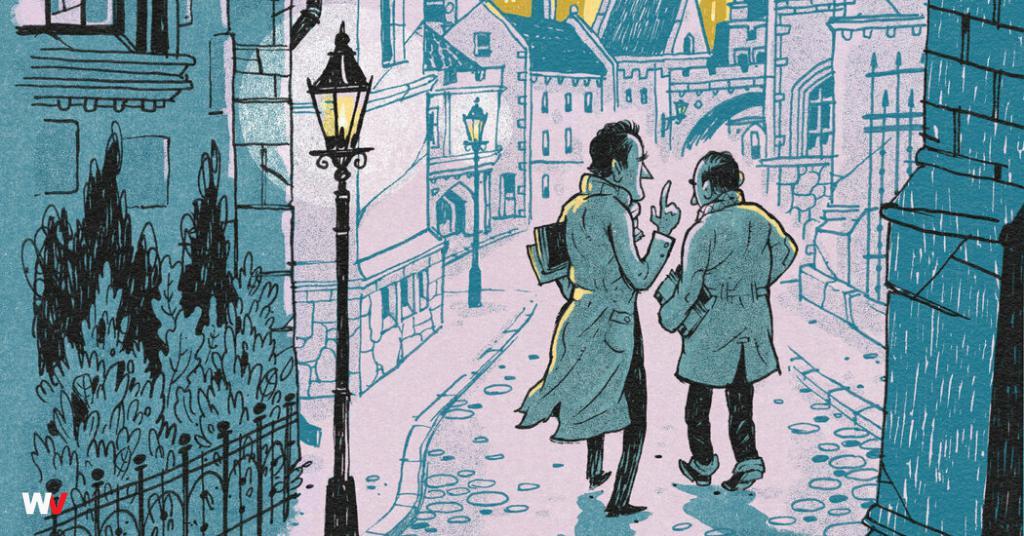
THE MYTHMAKERS: The Remarkable Fellowship of C.S. Lewis & J.R.R. Tolkien, by John Hendrix
I go back and forth as to whether it’s a gob-smacking coincidence or incredibly overdetermined that two of the principal architects of the modern fantasy tradition, J.R.R. Tolkien and C.S. Lewis, not only taught at Oxford together, but also were close friends for two decades. Lewis himself seems to have found this fact startling. “Nothing, I suspect, is more astonishing in any man’s life,” he wrote, “than the discovery that there do exist people very, very like himself.” The complex and not untroubled creative friendship between Jack (as Lewis was known to friends) and Tollers (as Lewis tweedily called Tolkien) is the subject of a fascinating new graphic novel by John Hendrix called “The Mythmakers.” It’s a biographical study, but it’s less about the men in question than it is about the creative spark that flickered between them, flared brightly and finally went out.
Tolkien was the elder by six years. He was born in South Africa and grew up in England, near Birmingham. Lewis spent his childhood in Belfast. Both lost their mothers when they were still boys. Both had an early passion for Northern European stories and mythology (Norse, Finnish, Germanic). Tolkien was raised with a powerful Christian faith that never deserted him. Lewis lost his belief in God during a stint at a boarding school that was ghastly even by British standards. “Nearly all that I loved I believed to be imaginary,” he later wrote. “Nearly all that I believed to be real I thought grim and meaningless.” He hadn’t seen anything yet.
Both Lewis and Tolkien served in World War I and endured some of the worst fighting on the Western Front. Each consoled himself in his own characteristic way: Lewis wrote poems cursing God; Tolkien wrote a poem about angels in a language he invented. Both had the relative good luck to be invalided out of the action and wind up back at Oxford.
Lewis’s first impression of Tolkien was famously underwhelming: “a smooth, pale, fluent little chap,” he wrote in his diary. “No harm in him: only needs a smack or so.” Lewis himself was not smooth — he was rumpled, red-faced and loud — but the two men bonded over their love of all things mythological and medieval. Tolkien was already assembling the vast home-brewed mythology out of which his best-known works would grow, but he was such a perfectionist, and so personally guarded, that he hadn’t shown it to anybody yet. Lewis was struggling with disenchantment and disillusion, searching for some kind of joy and meaning that would feel like more than childish fancy. “The fellowship of Tolkien and Lewis had brought them to the cusp of the most fruitful period of their lives,” Hendrix writes. “Each had the right key. The door was cracked open. It was time to pass through — together.”

From “The Mythmakers”: C.S. Lewis, left, and J.R.R. TolkienCredit…C.S. Lewis photograph: John Chillingworth/Picture Post via Getty Images; J.R.R. Tolkien photograph: collection National Portrait Gallery, London