Entertainment
How the Movies Made Joan Didion a Great American Writer
A new book by Alissa Wilkinson argues that the iconic writer’s imagination and signature style were profoundly shaped by Hollywood.
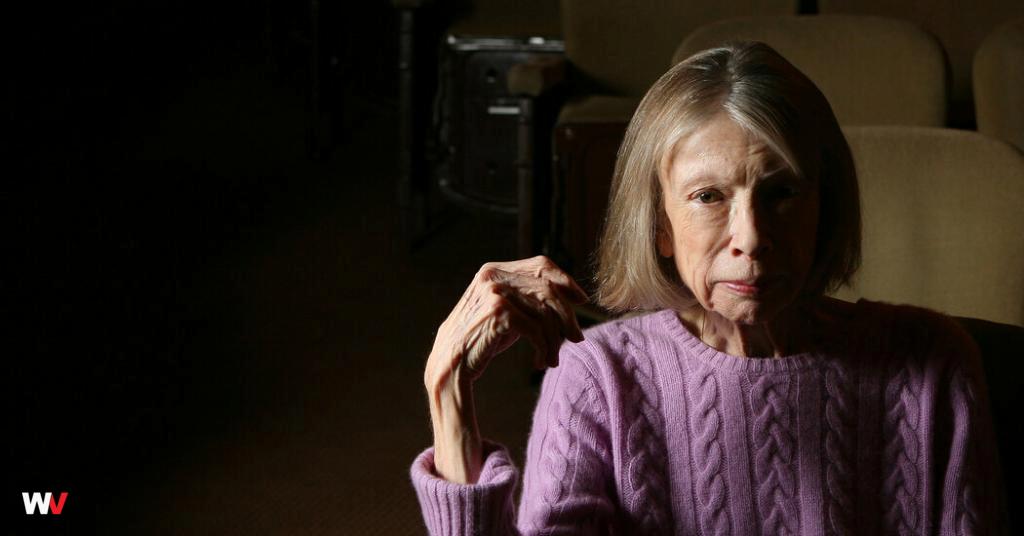
WE TELL OURSELVES STORIES: Joan Didion and the American Dream Machine, by Alissa Wilkinson
We go on needing Joan Didion. The aloof gaze; the Scotch and cigarette chic; the crestfallen scrutiny of America, of life. Whatever combined in her, we seek it over and over, in a way that seems only to be intensifying since her death in 2021. She has become one of the things she was most suspicious of: a myth. One of the stories we tell ourselves in order to live.
This is the famous line that provides the title for “We Tell Ourselves Stories: Joan Didion and the American Dream Machine,” Alissa Wilkinson’s thoughtful, perceptive new study of Didion and her relationship to movies. It’s one of those books that apprehend their thesis on the very last page. “The movies,” Wilkinson, a film critic for The New York Times, writes, “shaped us — shaped her — to believe life would follow a genre and an arc, with rising action, climax and resolution. It would make narrative sense. The reality is quite different.”
This passage identifies exactly the fracture from which Didion wrote; for all her legendary cool, the controlling emotion of her work is almost always dismay. How could the world be like this? The dream from which she fell into that disillusionment, Wilkinson convincingly suggests, was the silver screen.
Didion knew this herself, to some degree. Born in Sacramento in 1934, she was a daughter of both the West and the western. “When John Wayne rode through my childhood, and perhaps through yours, he determined forever the shape of certain of our dreams,” she wrote in “Slouching Towards Bethlehem,” her landmark 1968 book of essays. In her senior year at Berkeley, she won an essay contest sponsored by Vogue and moved to New York.
Her success thereafter was never really in doubt. She was, as they say on sports radio, a generational talent — so brilliant that in the genre at which she was second best by some distance, fiction, she produced, in “Play It as It Lays,” from 1970, a classic whose influence is still reverberating through contemporary fiction.