Entertainment
How the Humble Notebook Became an Essential Creative Tool
A notebook is a record of both solitude and connection. It’s a place for making real the quiet, flickering thoughts that otherwise might pass unnoticed, where words and sketches can stumble and fail. In a notebook, failure is less consequential …
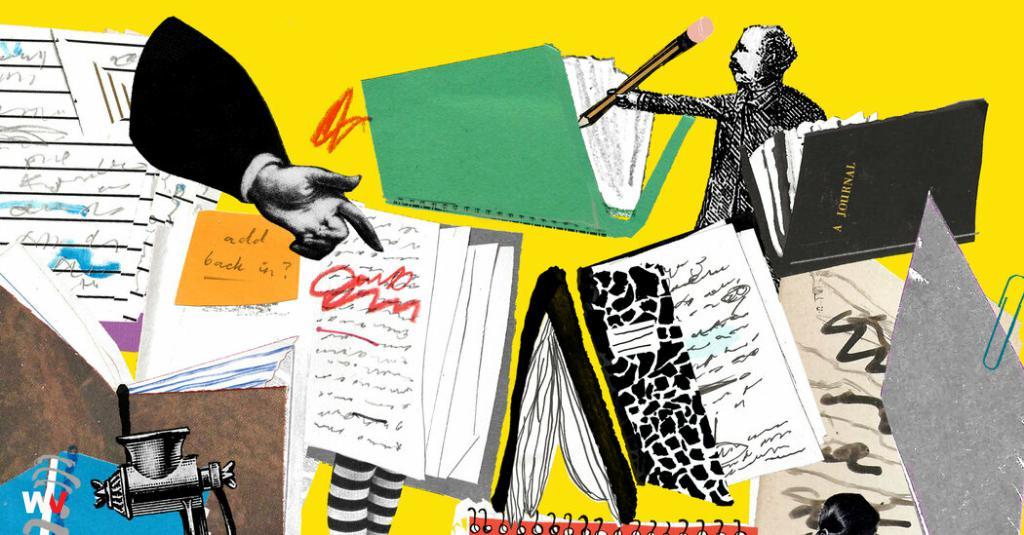
A notebook is a record of both solitude and connection. It’s a place for making real the quiet, flickering thoughts that otherwise might pass unnoticed, where words and sketches can stumble and fail. In a notebook, failure is less consequential because it’s not failure at all; it’s a necessary part of the messiness of exploration, of letting the unknown and the uncertain find form.
Look no further than the notebooks of the famous authors and artists whose relationships with these indispensable creative tools are chronicled by Roland Allen in THE NOTEBOOK: A History of Thinking on Paper (Biblioasis, 416 pp., paperback, $19.95). Beginning with a wax tablet recovered from a ship wrecked around 1305 B.C., Allen traces how notebooks, and their many permutations, have been used by a vast range of people — including politicians, mathematicians and sailors — from across the world.
The book is a revealing document of a relationship so intimate as to be sacred: that of the writer and the page. It’s a reminder that note-taking is an act of noticing, of being present and showing up to the blank paper, again and again, and discovering what may arise there. Below is a brief illustrated history, inspired by “The Notebook,” of some of the luminaries who did exactly that.
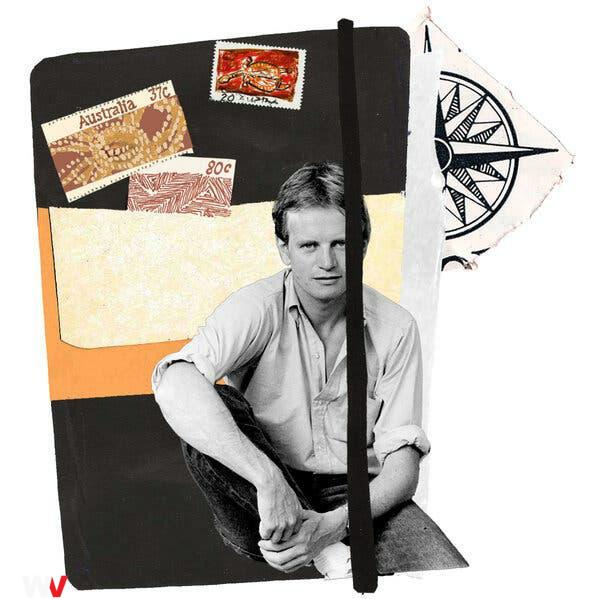
Bruce Chatwin
A well-known fact: Chatwin was a celebrated nomadic writer; a not-so-well-known fact: It was his homage to his own notebook in his best seller “The Songlines” that helped drive the craze for the elegant pleather Moleskines so ubiquitous today.