Entertainment
Family Is a Lot of Trouble in August’s Graphic Novels
The warp and weft of a single life is impossible to describe because there’s no such thing as a single life. Perhaps that’s why family stories are such a satisfying microcosm — they ask us not to consider one person’s vast depths, but to think about …
The warp and weft of a single life is impossible to describe because there’s no such thing as a single life. Perhaps that’s why family stories are such a satisfying microcosm — they ask us not to consider one person’s vast depths, but to think about how a collection of people form and change one another over their shared lives.
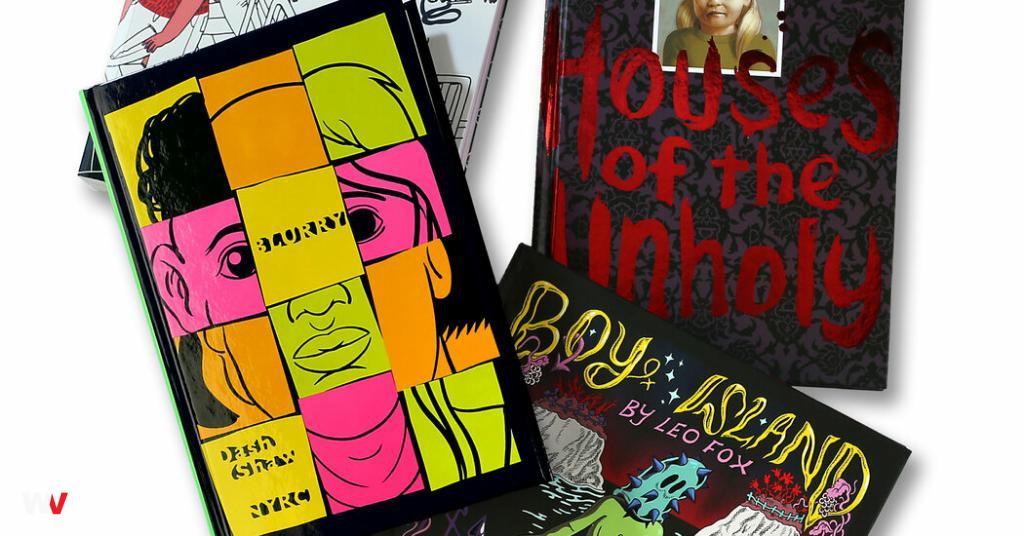
The people in Sole Otero’s remarkable MOTHBALLS (Fantagraphics, 336 pp., $29.99) are so simply delineated that their facial features are almost individual characters. Our narrator, Rocío, has a gap in her teeth that sometimes makes her mouth into an inside-out Q; her tragic great-uncle Antonio’s hairline is a pair of conjoined W’s. But their interlocking lives are complex in inverse proportion to their visual simplicity, as are the amazing architectural habitats and panel layouts Otero has designed for them to live in during their triumphs and miseries.
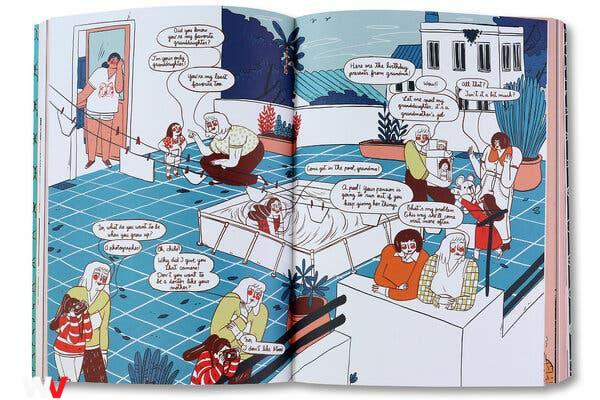
The cartoonist Sole Otero depicts the newly dead Vilma with images from her granddaughter Rocío’s memories of their time together.Credit…Sonny Figueroa/The New York Times
The most vivid character in “Mothballs” is Rocío’s estranged grandmother, Vilma, whose funeral opens the book. Vilma’s life is a sweeping melodrama that crosses generations, but that story is framed as Rocío’s recollection as she moves into her grandmother’s old house and tries to get acquainted with now-unfamiliar surroundings. The huge changes of Vilma’s life accrete into a family history, and little incidents in Ro’s sections form parallels. Beneath it all lurks Vilma’s possibly literal ghost.
The spirit of the great anarchic underground cartoonist S. Clay Wilson is alive and well in Leo Fox’s BOY ISLAND (Silver Sprocket, 168 pp., $29.99), where family is also important, but in far wilder ways. Fox’s book is a parable about identity and transition, and while he writes dialogue that sounds so real it could have been lifted from a supper-table argument, his imagery is ferociously imaginative. The book follows Lucille, who realizes he is a boy and must leave his mother and Girl Island for Boy Island, two places that were once one. His head looks like a blue executioner’s mask covered in spikes, but he is tenderhearted; when he finally confronts Fairy, the butterfly-winged spirit of conformity, conservatism and oppression, he confusedly accepts Fairy’s invitation to come inside and have a cup of tea and talk things through.