
Entertainment
Debt Was Supposed to Cure Poverty and Help Pay for College. What Went Wrong?
Three new books examine debt’s fraught politics and history.
“Going back to biblical times,” a man in the money-lending business once told me over beers in downtown Manhattan, “there was something dirty about charging for money.”
He held up his sudsy glass. “But a business owner can buy this beer for a dollar, mark it up eight times and sell it to idiots like us, and no one cares.”
His barroom philosophizing was self-serving. The man had earned a fortune off costly loans and spent his days partying in a mansion in Puerto Rico, while many of his borrowers were crushed by punishing interest rates. But there was a kernel of truth to what he said. Debt still carries a whiff of immorality, even as it’s become central to nearly everyone’s economic lives. After President Biden announced a federal student debt forgiveness plan — now tied up in legal challenges — Republicans denounced the initiative, often in shaming terms, blaming “slacker baristas” and “lesbian dance theory” majors who, having wasted their years in college, were unable to land a decent-paying job. Debt’s contradictions, its power and peril, are explored in three new books.
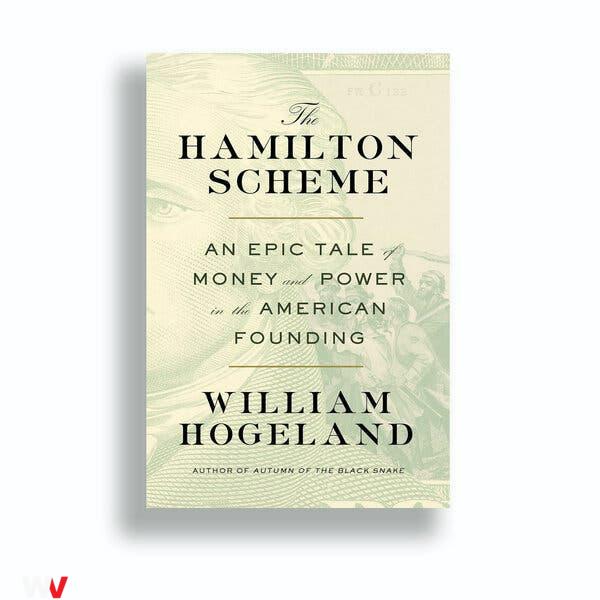
In THE HAMILTON SCHEME: An Epic Tale of Money and Power in the American Founding (Farrar, Straus & Giroux, 525 pp., $35), by William Hogeland, debt is a tool wielded by Alexander Hamilton to unify and empower the nascent United States. The scheme of the title is Hamilton’s plan to have the federal government assume the states’ Revolutionary War debts. A federal debt would require federal taxes, which in turn would mean funding for a federal army. It would enrich speculators and bind them to the country’s success. Through debt, Hogeland argues in this provocative, fast-paced book, Hamilton, the country’s first treasury secretary, aimed to consolidate the nation.
The debts that Hamilton had the government assume were minuscule by today’s standards, small enough that a federal tax on whiskey production and a tariff on imported goods were enough to cover the payments. (The national debt is now $35 trillion, and Donald Trump recently proposed his own scheme to pay it back: “We’ll hand them a little Bitcoin and wipe away our $35 trillion.”)