Entertainment
Calling All Misfits: When Greenwich Village Conquered the Music Scene
In his latest book, the Rolling Stone writer David Browne tracks three decades of folk, blues, rock and jazz below 14th Street.
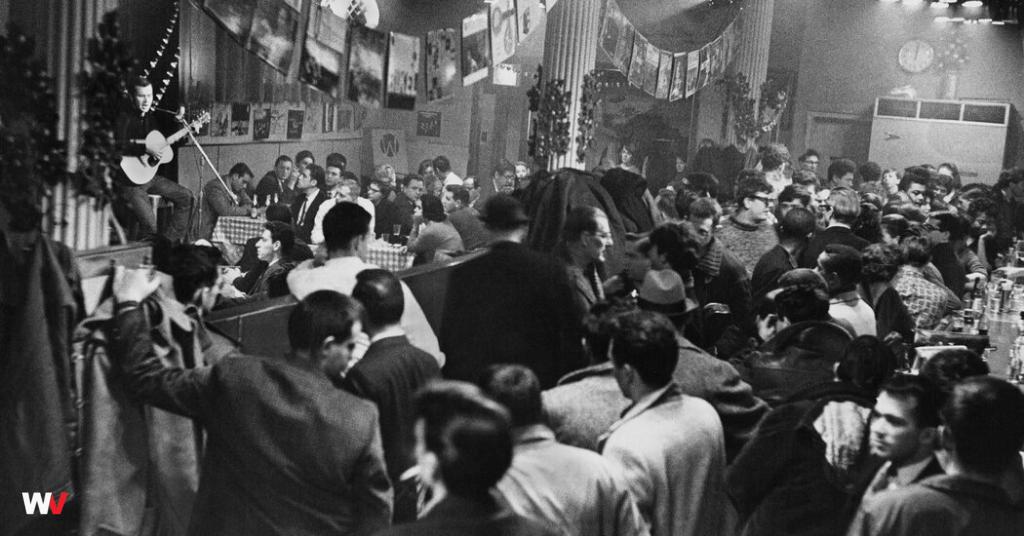
TALKIN’ GREENWICH VILLAGE: The Heady Rise and Slow Fall of America’s Bohemian Music Capital, by David Browne
In March 1961, Newbold Morris, New York City’s recently appointed parks commissioner, wrote in a memo that he had been “shocked” by what he saw and heard on a Sunday visit to Washington Square Park, in the heart of Greenwich Village. The park had long been a weekly gathering place for folk singers, and permits for those gatherings had long been routinely granted. But Morris expressed concern about “these fellows that come from miles away to display the most terrible costumes, haircuts, etc., and who play bongo drums and other weird instruments attracting a weird public.”
A few days later, another city official noted that there had been “written complaints from citizens or organizations regarding these folk singing groups.” And in April, a request for a permit from the Social Folk Singing Group — headed by Izzy Young, whose Folklore Center on MacDougal Street had become the nerve center of the growing folk revival — was denied. That denial prompted an organized protest in the park, which led to arrests. “Folk Singers Riot in Washington Sq.,” a New York Times headline declared.
Beyond the park, the Village, already a home for misfits and outsiders of all stripes (Newbold Morris didn’t know the half of it), was also becoming known as a place to hear folk music — Folk City had opened the year before, and a coffeehouse scene was starting to develop — and had been known for a while as a place to hear jazz. As David Browne makes clear, music in the Village faced, and would continue to face, obstacles — political, economic and otherwise — but it has endured.
Browne begins his story in 1957 and ends it in 1986, the year Folk City left its West Third Street location for a planned move that never happened. As a history of folk, rock and blues in the West Village in the second half of the 20th century, “Talkin’ Greenwich Village” is impeccably researched, elegantly written and consistently fascinating. Unfortunately, it has a jazz-size hole in the middle.
By 1958, Browne writes early on, jazz “was becoming the dominant genre in the neighborhood.” Later, in a passage about the opening of the jazz club Seventh Avenue South in 1977, he observes that “jazz had played a prominent role in the scene for decades.” But in a book that purports to paint the big picture, those comments amount to not much more than lip service.
Important Village jazz spots like the departed Bradley’s and Sweet Basil and the still-standing Blue Note are barely mentioned. Even the Village Vanguard — still in business after almost 90 years, and certainly one of the best-known jazz venues in the world — gets short shrift. Browne does acknowledge that the Vanguard was the site of celebrated live albums by the likes of John Coltrane, Sonny Rollins and Bill Evans, and he does refer to it as “iconic,” but he has disappointingly little to say about it beyond that. In contrast, the history of Folk City — a nondescript Italian restaurant that became a nightclub and quickly evolved into a showcase for, among many others, a young Bob Dylan — is recounted in loving detail.