Entertainment
Awaiting the Results of I.V.F., a Couple Watch the World Burn
In his novel “States of Emergency,” Chris Knapp doesn’t just tighten the distance between our inner lives and the world around us; he erases it.
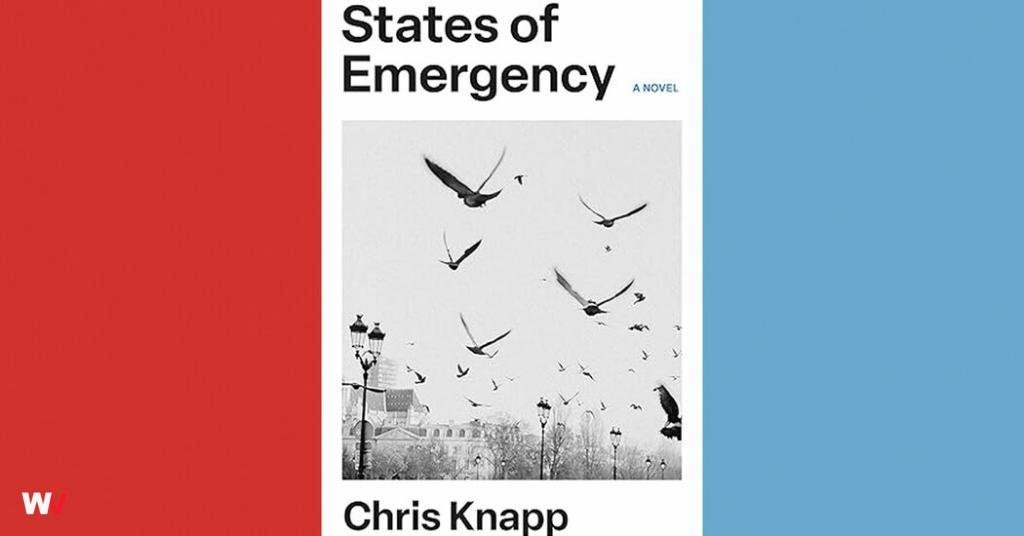
STATES OF EMERGENCY, by Chris Knapp
During a 2015 heat wave in Paris, an unnamed white American and his biracial French wife, Ella, follow the news of Greece’s debt crisis, watch episodes of “Homeland” and stash bottles of Perrier in the freezer. The atmosphere in their un-air-conditioned apartment is both tender and tense; they are awaiting the outcome of Ella’s fertility treatment. The husband, our narrator, wonders if the heat will impact the results of the procedure, as Ella endures “the mounting psychic pain of waiting to find out whether she was pregnant.” This is the real Perrier in the freezer: the precarious hope for parenthood in a world on the brink of combustion. “I was beginning to see the outline of an essay,” the narrator, an aspiring writer, tells us:
Public and private moments of upheaval are the catastrophes in Chris Knapp’s fantastically dense and omnivorous debut novel, “States of Emergency.” Climates both marital and global, existential terror and immediate terror, the dissolution of borders between countries and also people — such a list only simplifies the vertiginous simultaneity achieved in these pages. Knapp doesn’t just tighten the perceived distance between our inner lives and the world around us; he erases it. The result is a masterfully digressive story that moves across perspectives, time zones and time periods. Imagine a 24-hour news cycle that name-checks Walter Benjamin, Frantz Fanon, the New York City water supply, the Supreme Court case Obergefell v. Hodges and Chris Martin’s 2016 Super Bowl halftime show, and you’ll have something approximating the serious and often playful intellectual terrain of this novel. Knapp’s narrator is a flâneur with push notifications.
He leaves Paris for a two-year graduate writing program in Charlottesville, Va., where he emails with Ella and workshops a version of the novel we already have in our hands. “We could all agree this character was flailing,” one of his classmates says, pre-empting our own critique; “and his fascination with geopolitics, with injustice … was a way of repudiating the blitheness of his existence and borrowing from the world around him the makings of a heavier, more meaningful life.”
Doesn’t the current state of the world make even the blithest existence heavy, and also meaningful? Starting a family is a “political act,” the narrator thinks, “an assertion about how the world should be.” But how to bring new life into that heaviness? During their time apart, Ella suffers a miscarriage, and the narrator finds himself drowning in grief. “Ella has her body to remind her,” he thinks. “I only have my notes.”