Entertainment
A Vivid, Engrossing Biography of an Art-World Contrarian
In “The Maverick’s Museum,” Blake Gopnik presents the contradictory, intriguing, infuriating man behind the Barnes Collection.
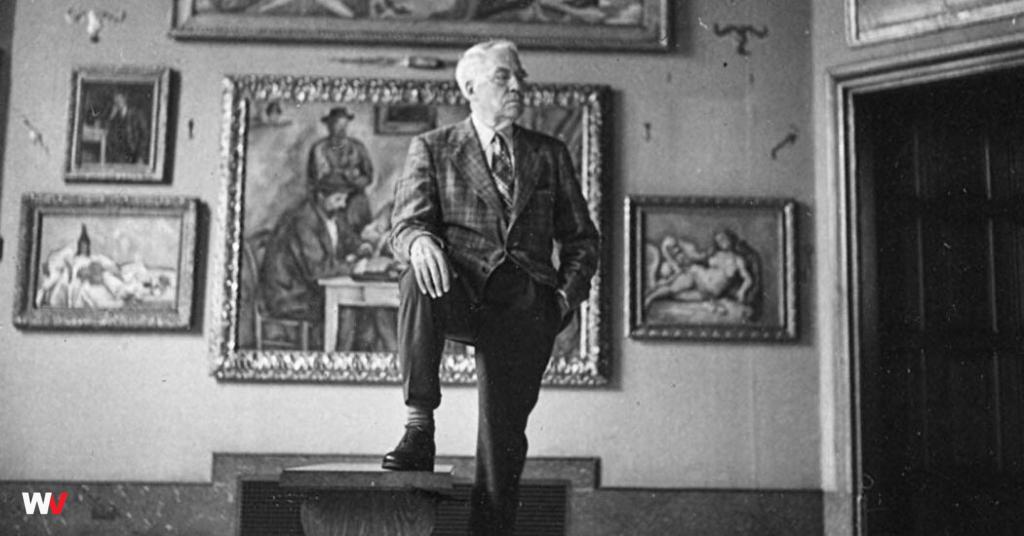
THE MAVERICK’S MUSEUM: Albert Barnes and His American Dream, by Blake Gopnik
Albert C. Barnes, among the first major American collectors of modern art, barrels onto the page in Blake Gopnik’s vivid, engrossing biography in a behemoth, chauffeur-driven, seven-seater, indigo Packard. Through a carpeted passenger door steps “an ox of a man,” in greatcoat and fedora, with “the look of an aging vice cop — someone who hit first and asked questions later.”
Voracious and vituperative, Barnes was a character of wild contradictions — a “tyrannical egalitarian,” a “patriarchal feminist,” a “Gilded Age progressive.” Co-inventor of a gonorrhea antiseptic used to prevent blindness in newborns, he amassed more than 4,000 pieces of art and objects, and set up a personal foundation dedicated to using the collection to teach “plain people” (not the intellectuals and philistine Philadelphia elites he disdained) how to learn to see.
Seventy-five years after his death, hundreds of thousands of people, plain and otherwise, pilgrimage annually to the Barnes Foundation to marvel at and puzzle over his “ensembles” — unorthodox arrangements of Impressionist and modernist masterpieces and minorpieces, African art, classical sculpture, Native American ceramics, old keyhole plates, colonial hinges and other ironmongery, all interspersed with a superabundance of Renoir nudes of the sort Mary Cassatt once called “enormously fat red women with very small heads.”
Less well known are the picaresque details of Barnes’s life, of which Gopnik, a longtime art critic and a biographer of Andy Warhol, makes delectable use. There’s the brainy boy’s escape from an impoverished childhood on the margins of a notorious Philadelphia slum; the factory where, in the segregated, early-20th-century city, his racially mixed workers were allowed to spend two hours a day in optional seminars on the likes of William James and Bertrand Russell; his foray into conducting psychoanalysis; his bulldozing, bridge-burning and “sheer lust for battle”; and his death in 1951 at age 79 in a collision with a 10-ton truck.
He was, as Thomas Hart Benton put it, “friendly, kindly, hospitable” and “a ruthless, underhanded son of a bitch.” Ezra Pound described him as living in “a state of high-tension hysteria, at war with mankind.”