Entertainment
A More Freewheeling Book Lives Inside Al Pacino’s Memoir
From Shakespeare to Strindberg to “Scarface”: The actor remembers all of it and talks about some of it in “Sonny Boy.”
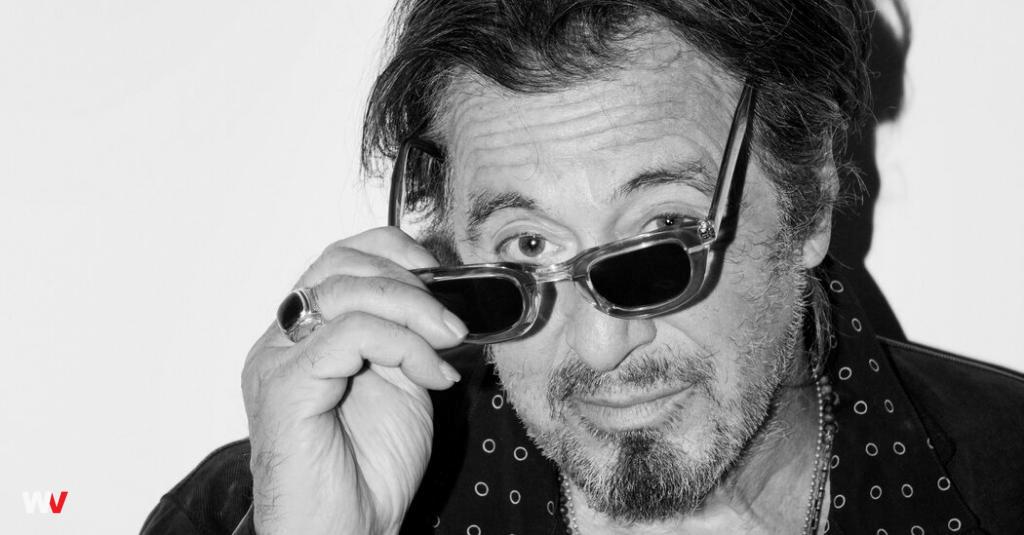
SONNY BOY: A Memoir,by Al Pacino
Al Pacino was a young actor in 1968, rehearsing for a now-forgotten play called “Huui, Huui” at the Public Theater. One day the Public’s impresario, Joseph Papp, took him aside, told him, “You will be a great star one day,” and fired him. Just a few years later, while making “The Godfather,” his director, Francis Ford Coppola, summoned him to a restaurant where he was having dinner with his family. Without inviting Pacino to sit down, Coppola warned him, “You’re not cutting it.” Soon after, under threat of being fired by the studio, Pacino shot one of the classic scenes in film history, when Michael Corleone enters a restaurant bathroom, retrieves a hidden gun and becomes a killer. The intensity and fear on Michael’s face are still chilling.
Pacino tells anecdotes like those with modesty and a bit of a shrug — “In this business, you’re up, you’re down, and you’re up again,” he says — and they are among the most endearing parts of “Sonny Boy.”They pop up sporadically in an uneven memoir that is sometimes a heartfelt consideration of art, and often a perfunctory cradle-to-age-84 overview of his life and career. Pacino doesn’t dish gossip or give much detail about his personal life, but he is passionate about acting. You can almost hear a collaborator or editor leaning over his shoulder here, saying, “Al, at least mention the affair with Tuesday Weld,” nudging the book toward its cookie-cutter, uninspired form. (In the acknowledgments, Pacino thanks both his collaborator, Dave Itzkoff, and editor, Scott Moyers.)
“Sonny Boy,”titled afterhis mother’s boyhood nickname for him, begins in the most conventional way, in childhood. Pacino’s parents divorced when he was 2, and he lived in a working-class neighborhood in the South Bronx with his loving but emotionally fragile mother and grandparents. With obvious affection, he remembers running around the neighborhood with his pals Cliffy, Bruce and Petey. All three of those friends later died of drug overdoses, a fate Pacino was spared thanks to his family’s vigilance. This stretch of the memoir is earnest, but not especially revealing. Plenty of boys survive rough childhoods and don’t become one of the greatest actors of their time.
More of Pacino’s voice comes through when he talks about acting, and his goal of instinctively embodying a character. He dropped out of the High School of Performing Arts at 16, worked odd jobs and performed in tiny, way-off-Broadway spaces. Onstage in Strindberg’s “Creditors,”he had a life-altering epiphany. “Words are coming out, and they’re the words of Strindberg, but I’m saying them as though they’re mine,” he says. “I’m lifting off the ground.” From then on, “I eat, I don’t eat. I make money, I don’t make money. I’m famous, I’m not famous.” Careerism was beside the point. That sounds like Pacino because the idea fits with his lifelong pursuit of art at its most sincere, as in several small films he directed, including “Looking for Richard” (1996), about Shakespeare’s “Richard III,” right through to his role as King Lear in a film he has been shooting.
He won a Tony early, but movies changed everything. In the 1970s alone he starred as a drug addict in “The Panic in Needle Park,” a breakthrough followed quickly by enduring performances in “Godfather I”and “II,” “Serpico” and “Dog Day Afternoon,” films largely shaped by his singular conviction and kinetic presence in the lead roles.
He tells a few behind-the-scenes stories from movies through the decades. He was rushed to an E.R. while making “Scarface” because a machine gun fused to his hand when he grabbed the hot barrel. But he is better at analyzing his performances. The drug-fueled crime boss Tony Montana in “Scarface”is deliberately two-dimensional. “The way I played him, the character never has any inner conflict until the moment he kills his best friend.” And Pacino is well aware of his reputation for scenery chewing, never more deserved than in his often parodied performance yelling “Hoooooo-ah!” in “Scent of a Woman.” With great understatement he says, “I did go overboard sometimes in that part.”