
Entertainment
A Dossier of Courtroom Sketches Captures the Faces of Evil
In “Drawn Testimony,” the portraitist Jane Rosenberg takes you inside high-profile federal trials across four decades.
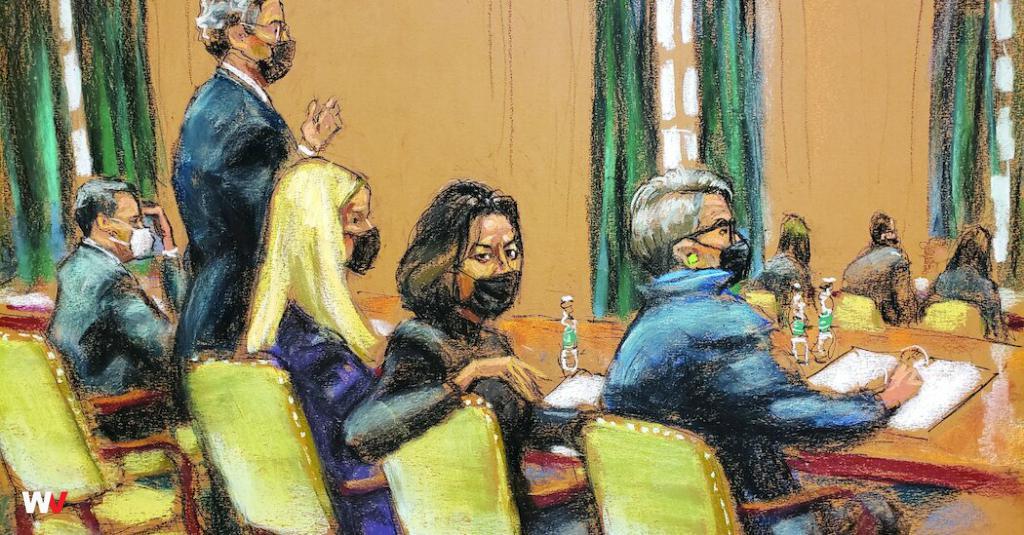
In 2021, Jane Rosenberg took her usual place in federal court, this time the Thurgood Marshall Courthouse in Lower Manhattan, a sketch pad on her lap and a box of pencils, pens and ink resting on a stand to her right, newspapers spread out below her chair. For more than 40 years, her eye has gone where cameras legally cannot, capturing “the human stories of people as they pass through the court and justice system,” from high-profile perpetrators (Bill Cosby, Derek Chauvin, Harvey Weinstein, the Boston Marathon bomber Dzhokhar Tsarnaev) to victims, witnesses and legal professionals.
Some subjects engage with the portraitist “staring at and studying them,” but this one, Ghislaine Maxwell, “took out a sketch pad of her own and decided to turn the tables,” drawing Rosenberg herself with a pencil. “If the trial was a stage,” Rosenberg writes in her memoir, DRAWN TESTIMONY: My Four Decades as a Courtroom Sketch Artist (Hanover Square, $30), the British socialite on trial for the sex trafficking of minors alongside Jeffrey Epstein “looked comfortable in the central billing that had been afforded her.”
In precise, often lyrical prose, Rosenberg reflects on a career at the intersection of art and law, fact and impression, reason and emotion. As captivating and nuanced as the drawings themselves are the descriptions of her creative process — beginning with the “foundational black lines” of her pastel pencil, “geometric shapes that will become faces, limbs and features,” adding color and highlights until “a body emerges, as if appearing through fog” — and of “the most disturbing assignment of my career”: drawing the convicted murderer John Evans in all “the agony of his botched execution” in the electric chair in Alabama in 1983.
Throughout, her hand remains steady, and faithful. At times, “I’ve been brought to tears and had to pull my face away from the drawing I’m working on,” she writes, “knowing that even a little moisture will disfigure the pastel strokes.”