Entertainment
A Climate Resistant Community Passed Two Hurricane Tests
On the west coast of Florida, a town built to weather hurricanes hosted more than 2,000 people during Hurricane Milton. Could communities like this help shape Florida’s future?
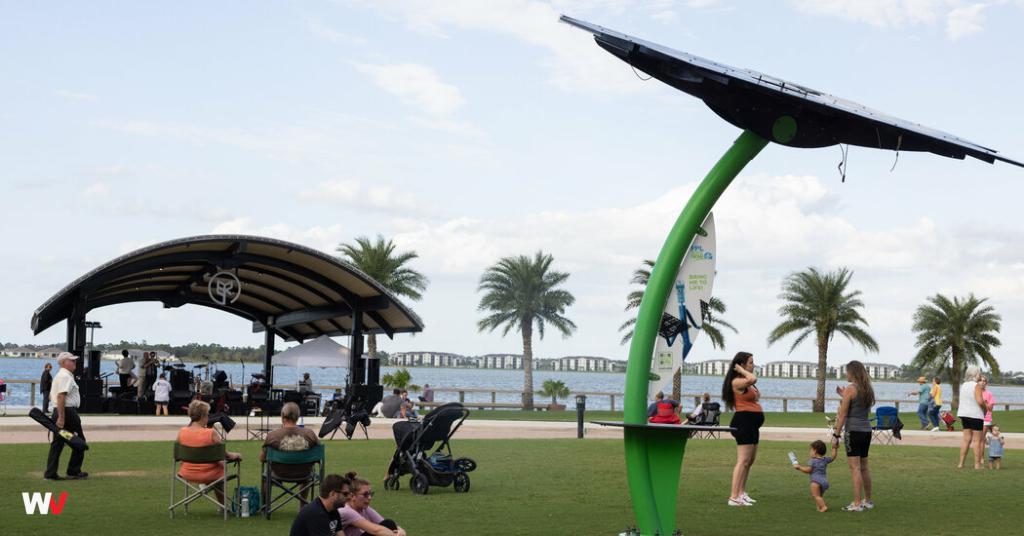
As Hurricane Milton rushed ashore last Wednesday at least 2,000 Floridians found safe haven at Babcock Ranch, a community the size of Manhattan thatopened in 2018 to withstand climate-driven storms.
Evacuees spread across two buildings designated as shelters by the Florida Division of Emergency Management: a K-12 school held about 400 people and a 40,000-square-foot sports facility housed about 1,600 more. Many fled from Fort Myers, a coastal city about 15 miles to the southwest, where residents were under a mandatory evacuation order.
“When Governor DeSantis made the announcement that Babcock Ranch was open we saw a very big surge in evacuees,” said Syd Kitson, the town’s co-founder who estimated that hundreds more evacuees sheltered in private homes of the town’s roughly 10,000 residents. “It saved a lot of lives in some really dangerous areas.”
All the structures at Babcock Ranch are built to withstand more than 150-mile-per-hour hurricane force winds, and its 150-megawatt solar farms and underground transmission system means the community rarely loses electricity. Roughly 90 percent of the property is preserved wetland that helps collect excess water and rarely floods. After Hurricane Milton, the town saw some downed trees and traffic lights, but they never lost power.