General
When A.I. and Doctors Make the Diagnosis
More from our inbox: Toxins in Our WaterBreasts on BillboardsThe $6.2 Million BananaA Deportation QuestionIn an experiment, doctors who were given ChatGPT to diagnose illness did only slightly better than doctors who did not. But the chatbot alone …

More from our inbox:
- Toxins in Our Water
- Breasts on Billboards
- The $6.2 Million Banana
- A Deportation Question

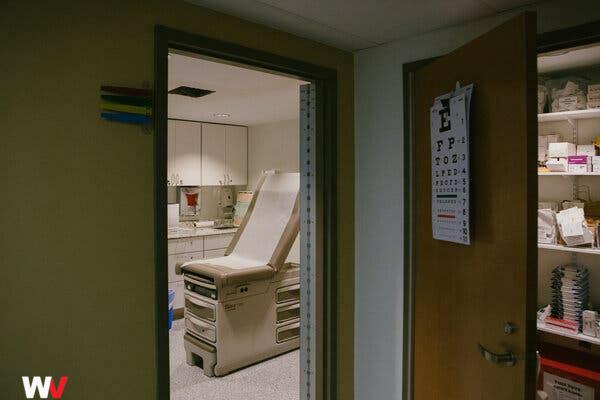
In an experiment, doctors who were given ChatGPT to diagnose illness did only slightly better than doctors who did not. But the chatbot alone outperformed all the doctors.Credit…Michelle Gustafson for The New York Times
To the Editor:
Re “A.I. Chatbots Defeated Doctors at Diagnosing Illness” (Science Times, Nov. 19):
As a physician and medical educator, I found this article’s provocative title a missed opportunity to highlight the real story in these research findings.
The study doesn’t prove A.I.’s superiority over physicians; rather, it exposes flaws in our outdated methods of education. The continued use of closed-book testing inadvertently leads doctors to overvalue memorized information, an approach no longer as useful in a world where it is estimated that medical knowledge doubles every 73 days. If anything, the A.I.-naïve physicians’ skepticism of the GPT diagnoses reflects appropriate professional judgment; we’re taught to demand validated evidence before changing our minds.
Furthermore, the research reveals how our cognitive processes both help and hinder us; the same pattern recognition that helps doctors easily diagnose common conditions may lead to unconscious bias or diagnostic errors with rare disorders, such as those in the study.
Most concerning is how this article might drive patients toward unvetted commercial chatbots for self-diagnosis. The solution isn’t replacing doctors with chatbots, but rather redefining what skills 21st-century physicians need to succeed.
Medical schools should select for curiosity and mental flexibility alongside compassion and competence, teaching skillful use of A.I. along with how to recognize and disrupt biases. In this way, we can leverage A.I. to benefit both patients and clinicians, while preserving health care’s irreplaceable human elements.
Rachel S.C. Friedman
Santa Rosa, Calif.
To the Editor:
I’m not surprised that a chatbot outperformed doctors in diagnosing illness. Now don’t misunderstand me: I have trained as a doctor, and physicians have my utmost respect. But doctors are sifting through mountains of data, often in a limited time window, relying on intuition and human expertise. This is probably another reason they’re not always eager to entertain a different answer from a chatbot.