General
This Time, It May Actually Come Down to Turnout
Democrats have gained among high-turnout voters, while Donald Trump has made gains among groups that tend to show up only for presidential races, or not at all.


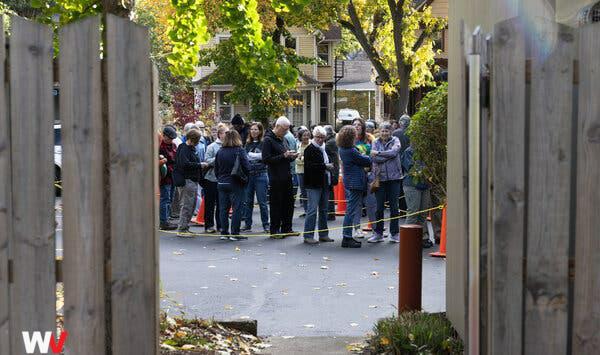
Who will have the hidden edge in turnout?Credit…Matt Burkhartt for The New York Times
Every four years, the pundits say “it all comes down to turnout.” The line is such a cliché — it’s never inaccurate but also means nothing — that it’s sometimes a joke on social media.
This year, though, I’m not laughing. This time, the election really might come down to turnout.
Usually, this is not my view. If anything, I have tended to think of turnout as a somewhat overrated factor in explaining election results. The makeup of the electorate is relatively predictable; the big question is usually whom those voters will support. In Pennsylvania in 2022, for instance, the same voters backed a Democrat for governor by 13 percentage points and another Democrat for Senate by five points, and backed Republicans in the U.S. House. This wide variation all came from the same turnout!
But this election seems different. As we’ve reported all cycle, Democrats excel among high-turnout voters, while Donald J. Trump is strong among relatively low-turnout voters. He’s made his biggest gains among low-turnout demographic groups like young men and nonwhite voters.
This pattern has held all the way to the final stretch.
In the last wave of New York Times/Siena College polls of key battlegrounds, Kamala Harris led collectively among voters who turned out in recent primaries or the 2022 midterms, while Mr. Trump had a 12-point lead among the 2020-but-not-2022 vote and a 19-point lead among those who didn’t vote in 2020 (but who were registered at the time; new registrants are evenly divided).
This is an extraordinary change from as recently as a decade ago, when Democrats were presumed to be the party that benefited from high turnout. During the Obama era, Democratic chances seemed to depend on mobilizing young, nonwhite and infrequent voters to the polls.