General
Full Stands, Full Volume: The Olympics You Remember Are Back
Tara Davis-Woodhall, a long jumper by trade and an entertainer at heart, gazed into the stands at Tokyo’s 68,000-seat Olympic stadium and decided she needed some noise. In a quixotic bid to inject even a small dose of spirit into a pandemic-stricken …

Tara Davis-Woodhall, a long jumper by trade and an entertainer at heart, gazed into the stands at Tokyo’s 68,000-seat Olympic stadium and decided she needed some noise. In a quixotic bid to inject even a small dose of spirit into a pandemic-stricken Summer Games, she began clapping her hands theatrically.
Tens of people, give or take, clapped back.
“It was awful,” Davis-Woodhall said last month about the enforced emptiness of the Olympics three summers ago. “It was my first Olympics, and I was like, ‘What the heck? This is weird!’ I’m glad it’s over, and I’m glad that I’m going to Paris to actually experience an Olympics.”
Countless athletes like Davis-Woodhall — those who have competed in an Olympics but not truly experienced one — have arrived in Paris this month in search of the same thing: normal Games.
Because normalcy, at the Olympics, is grandeur. It is the distinct cocktail of sound and color produced by the gathering of more than 200 national teams and millions of fans. It is athletes climbing into the stands to celebrate with family and friends, or to be consoled by them. It is crowds cheering for sports they do not typically watch.

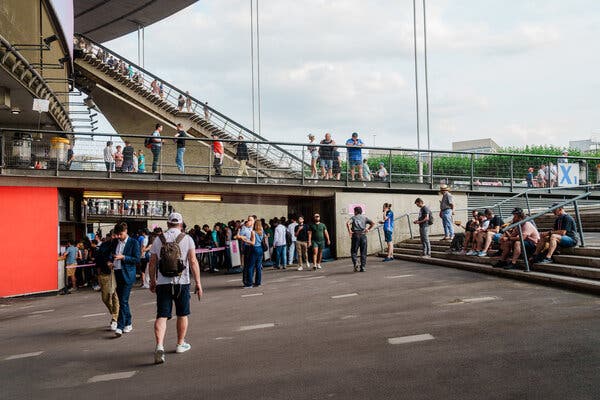
Spectators arriving for the first round of rugby sevens matches on Wednesday.Credit…Gabriela Bhaskar for The New York Times